





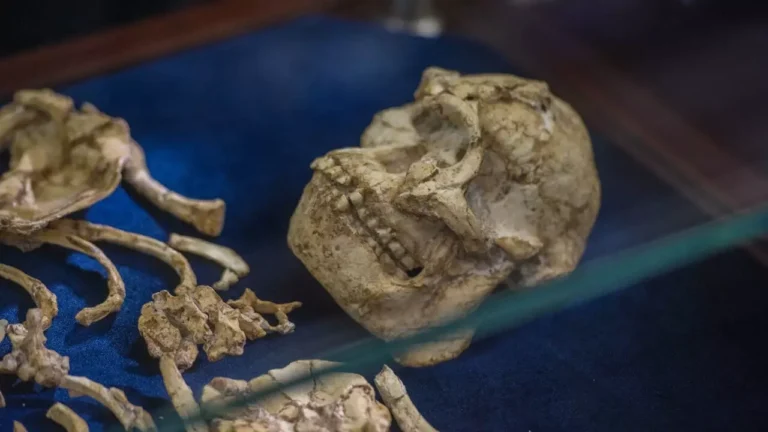
Lucy, a 3.2 million old fossil skeleton of a human ancestor of Ethiopia, is set to be displayed in Europe for the first time; an official from Ethiopian ministry of tourism told APA on condition of anonymity over the weekend.
The world-famous fossil, discovered 50 years ago in Ethiopia’s Afar region by American paleoanthropologist Professor Don Johanson, will be showcased at the National Museum of Prague in the Czech Republic.
He said that Lucy’s upcoming exhibition marks her first-ever journey to Europe. “Before this, Lucy’s skeletal remains were exhibited only once outside Ethiopia—in the United States,” he noted.
The decision to send Lucy to Europe was made as part of efforts to strengthen Ethiopia’s diplomatic and cultural ties with the Czech Republic. The arrangement was finalized during a visit to Ethiopia by Czech Deputy Prime Minister Marian Jurečka in December 2024.
“Lucy is now ready to travel, and preparations are underway for her display at the Prague National Museum. She will stay in Europe for about six weeks to two months,” he added.
According to the official an Ethiopian delegation will travel to Prague ahead of time to assess the logistics, including transportation and display conditions.
Discovered in 1974 at the Hadar site in the Awash Valley, Lucy—classified as the species of Australopithecus afarensis—is one of the most significant finds in the history of palaeoanthropology. Her skeleton, which is about 40 percent complete, provided ground-breaking insights into early human evolution, especially evidence that early hominins walked upright on two legs.
Lucy is scheduled to leave the National Museum of Ethiopia on August 25, and will be exhibited at the National Museum of Prague for approximately two months.
MG/as/APA