



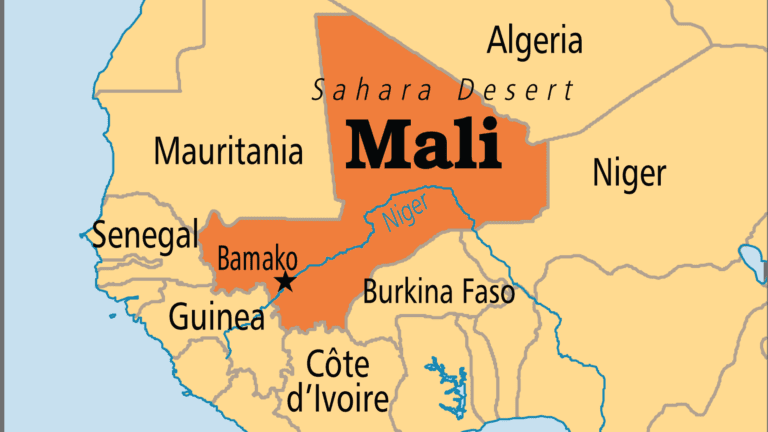
The Resident Representation of the Economic Community of West African States (ECOWAS) in Mali held an official ceremony marking the end of Mário Gomes Fernandes’ mission as Resident Representative on February 28, 2025.
This transition comes in a rapidly changing regional context, marked in particular by the creation of the Alliance of Sahel States (AES) and the gradual withdrawal of some member countries from ECOWAS.
During his term, Mário Gomes Fernandes witnessed major events affecting the Sahel region. On 16 September 2023, Mali, Burkina Faso and Niger signed the Liptako-Gourma Charter, establishing the AES, an alliance designed to strengthen cooperation in defence and security in the face of common threats.
In January 2024, these three countries officially announced their intention to leave ECOWAS, judging that the organisation was being manipulated by foreign powers and no longer served the interests of their populations.
Their departure became effective on January 29, 2025, after a one-year notice period, marking a major geopolitical reorganization in West Africa.
A six-month transition period, until July 29, 2025, was planned to settle the terms of this separation. This withdrawal sparked strong reactions. ECOWAS expressed its concerns about the political, economic and institutional consequences of this decision.
In Mali, some opposition actors criticized this choice, calling it illegitimate and regretting the lack of national consultation.
The coordination of organisations of the February 20 Appeal, for its part, deplored a challenge to regional integration. On a practicable level, the withdrawal from ECOWAS could lead to mobility restrictions for Malian citizens, with the possible introduction of visas to travel to the other member countries.
On the economic level, although Mali’s exports are mainly destined for partners outside ECOWAS, around 37 per cent of its imports come from the region, including essential products such as food and electricity. This situation could disrupt trade and affect the country’s supply.
The departure of Mali, Burkina Faso and Niger represents a major challenge for ECOWAS, which must rethink its cohesion and strategy in the face of the region’s security and economic challenges.
For its part, the ESA is positioning itself as a new regional entity, affirming its desire to strengthen ties between its members to address common challenges.
The end of Mário Gomes Fernandes’ mission in Mali thus falls within a period of profound geopolitical upheaval in West Africa, where alliances are being redrawn and regional organisations must adapt to new realities.
MD/te/fss/gik/APA