





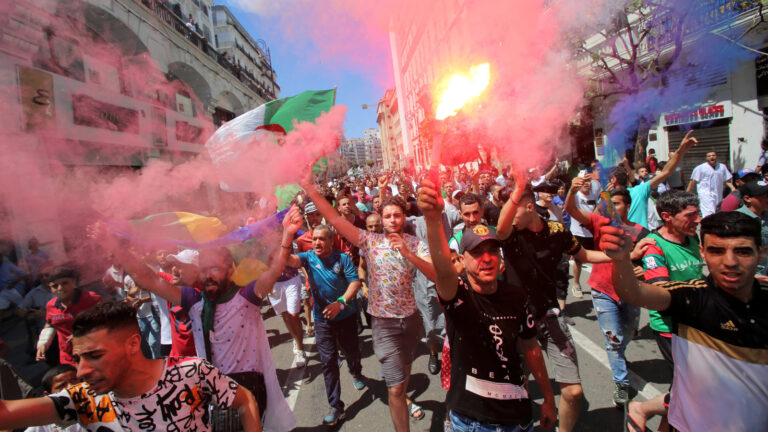
Algeria may be on the verge of renewed season of protests, as unresolved tensions from the 2019 Hirak movement resurface.
Under the banner “GenZ213,” young Algerians are calling for street demonstrations on Friday, October 3, to protest a worsening political and socio-economic situation.
Viral social media posts indicate the movement aims to rekindle the spirit of the 2019 Hirak, which had toppled former President Abdelaziz Bouteflika. Political analyst Oualid Kebir notes that peaceful marches are planned after Friday prayers in several provinces to voice popular rejection of corruption, economic stagnation, and the political monopoly of the ruling elite.
Algeria faces alarming economic challenges: youth unemployment exceeds 30%, inflation and rising living costs erode purchasing power, and no credible political reforms have been implemented.
Relying on a declining oil and gas rent, the regime has left the younger generation, often described as “sacrificed,” increasingly determined to take up the mantle of protest.
The resurgence occurs amid state media criticism of Morocco’s handling of recent youth demonstrations over health and education shortcomings—a striking contrast to domestic unrest. Calls to march toward El-Mouradia, the presidential palace, carry symbolic weight.
Observers question whether Generation Z can overcome the regime’s longstanding repression of dissent.
The shadow of the 2019 Hirak looms once again over Algiers and other major cities. For many, this is less an isolated surge than a signal that Algerian society, trapped in political stagnation, may once more erupt, even as the regime positions itself as a “geopolitical voice” internationally.
MK/ac/lb/as/APA