





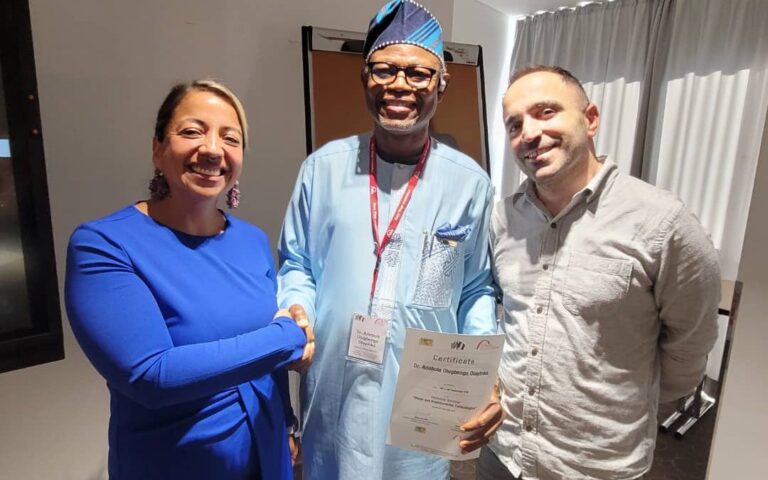
The National President of the Association of Waste Managers of Nigeria (AWAMN), Dr. Olugbenga Adebola, has called for technology, stronger regulation and citizen participation to transform Nigeria’s waste management sector.
Speaking after a 10-day technical study tour to Bavaria, Germany, Adebola said that the tour focused on environmental technologies, waste management, circular economy and sewage and wastewater management.
Adebola said that the delegation examined systems where waste, wastewater and energy were managed as resources through regulation, technology and citizen participation.
He said that Nigeria did not need to copy the German model but could adapt its principles to local socio-economic conditions.
“Waste is not waste unless you waste it. Don’t waste your waste; it is a resource,” Adebola said.
He explained that the tour demonstrated that technology alone could not address environmental challenges without effective governance and public participation.
Adebola added that the delegation visited companies and facilities involved in wastewater treatment, water treatment, sludge management, digital monitoring and municipal waste management.
According to him, the visit to Klara GmbH demonstrated the potential of decentralised, modular wastewater treatment plants for communities, estates and hotels without central sewage systems.
He noted that such systems can be considered for estates and developments in Lagos and Abuja since the systems can reduce reliance on septic tanks and soakaways that can contribute to groundwater contamination.
“At Clearfield PPU Water Systems, the delegation examined water treatment and pipe systems designed to reduce energy consumption and resist corrosion,” he said.
Adebola said the technology could be explored for coastal communities, while local manufacturing could create opportunities for Nigerian businesses.
He said the visit to UTP Umwelttechnik Pöhnl GmbH exposed the delegation to conversion of sewage sludge into dried pellets for cement production.
According to him, Nigeria could explore partnerships between wastewater authorities and cement manufacturers to convert treated sludge into an energy resource.
Adebola said the delegation also examined digital systems developed by FlowChief GmbH for monitoring sewage flows, pump stations and waste collection operations.
He said similar technology could improve waste collection, monitor truck routes, reduce operational costs and provide early warnings on blockages.
GIK/APA