





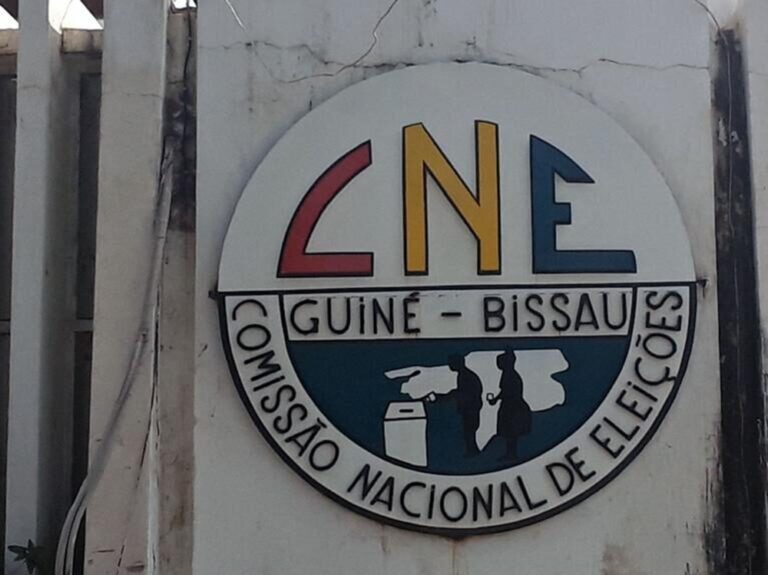
The United Nations is sounding the alarm over the political deadlock in Guinea-Bissau, reporting that the National Electoral Commission (CNE) is technically unable to publish the results of the November 23 election.
Furthermore, the military authorities have failed to make a clear commitment regarding the release of detained political figures. Leonardo Simao, the UN Secretary-General’s Special Representative for West Africa and the Sahel, painted a worrying picture of the situation on Monday, following the ECOWAS emergency mission’s meetings in Bissau.
Mr. Simao confirmed the CNE’s technical paralysis: “The CNE indicated that it is not technically able to publish the results of the November 23 election because it has not received all the data from the electoral process. No guarantees have been given regarding the preservation of this essential information.”
The CNE was originally scheduled to announce the provisional results on November 27, but the coup d’état, led by General Horta N’Tam, interrupted the process. The failure to secure electoral data further complicates the immediate demand by ECOWAS for the restoration of constitutional order and the proclamation of the election results.
Regarding the arrested political figures, Mr. Simão stated that the military authorities were non-committal: “The military authorities have only indicated that they will inform ECOWAS, on a case-by-case basis, of the commission’s decisions. No firm commitment or deadline has been provided.”
The ECOWAS delegation, led by Sierra Leonean President Julius Maada Bio, met with the military authorities on Monday. The Guinea-Bissau Minister of Foreign Affairs, Joao Bernardo Vieira, had assured the public that the electoral data would be made available and that commitments had been made for the release of the detainees. However, the UN envoy’s statement contradicted these assurances.
Mr. Simao reiterated that the ECOWAS mission was solely for information gathering and that the region must await the report’s presentation to the ECOWAS Heads of State and Government Conference, scheduled for December 14.
The new authorities continue to justify their intervention by the necessity of avoiding “a large-scale conflict” and have announced a one-year transition period, which will be submitted to the ECOWAS conference. Notably, the mission did not meet with presidential candidate Fernando Dias da Costa, who remains refuge at the Nigerian embassy, while his main supporter, Domingos Simoes Pereira, remains in detention.
Despite the setbacks, Mr. Vieira reaffirmed ECOWAS’s support: “The organization will not abandon Guinea-Bissau at this critical juncture and will continue its efforts to restore constitutional order.”
AC/fss/abj/APA