



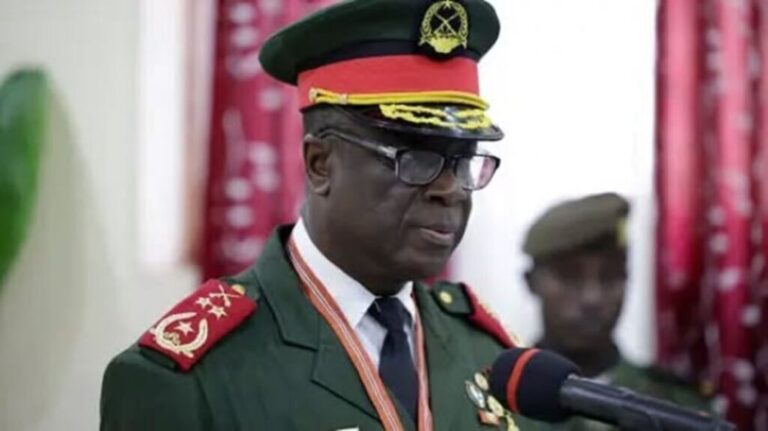
Guinea-Bissau’s transitional authorities have announced that legislative and presidential elections will be held on December 6, 2026, amid strong diplomatic pressure from the West African regional bloc ECOWAS for a rapid restoration of constitutional rule.
The date was set by the transitional president, Major General Horta N’Tam, through Presidential Decree No. 02/2026, published on Wednesday in Bissau.
The decree refers to the Political Charter of the Transition adopted on November 27, 2025, and states that conditions are gradually being put in place to organise elections that are “free, fair and transparent.”
The announcement comes less than two weeks after a high-level ECOWAS mission led on January 10 by Sierra Leonean President Julius Maada Bio, the current chair of the regional bloc. The delegation also included ECOWAS Commission President Dr Omar Alieu Touray and Senegalese President Bassirou Diomaye Faye.
“In line with the communiqué of the 68th ECOWAS Summit, I led a high-level mission to Guinea-Bissau to engage with the military high command,” Julius Maada Bio said, stressing the need for a short, inclusive and consensual transition.
The visit followed, by a few days, a trip by a Senegalese official that resulted in the partial release of political detainees close to opposition figure Domingos Simões Pereira. The latter, a former speaker of the National People’s Assembly, remains in detention.
ECOWAS, which rejected the initial transition timetable announced by the perpetrators of the November 26 coup, continues to demand the release of all political prisoners, the protection of national institutions by the ECOWAS Mission in Support of Stabilisation in Guinea-Bissau (MISGB), and has warned that targeted sanctions could be imposed against any obstruction of the process.
The regional organisation has not yet reacted to the announcement of elections scheduled for December next year.
General Horta N’Tam seized power 24 hours before the announcement of the results of the November 23 2025 elections that ECOWAS and other international observers had nevertheless described as “free, transparent and peaceful.”
AC/lb/as/APA