



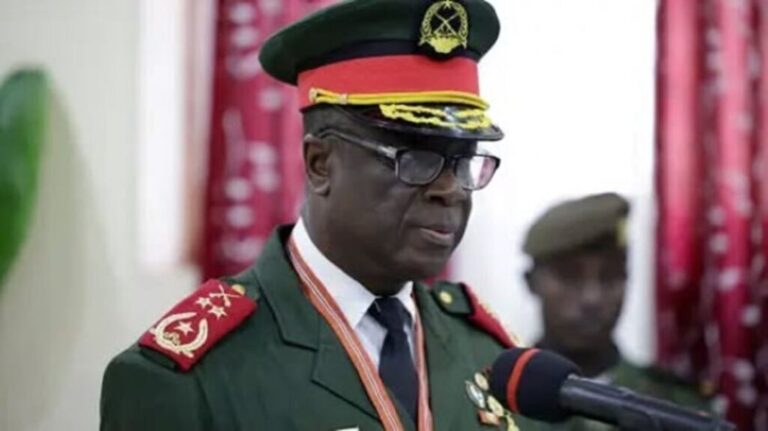
Guinea-Bissau’s transitional parliament adopted a major constitutional revision on Tuesday, strengthening the
powers of the president, now head of government, while maintaining the semi-presidential system.
This reform comes three decades after the last constitutional amendment in 1995.
The National Transitional Council of Guinea-Bissau approved the draft revision of the Republic’s Constitution on Tuesday, 30 years after the last amendment, the institution’s spokesperson told a press conference.
The constitutional revision comes as Guinea-Bissau coninues to be led by a military high command since November 27, following the overthrow of Umaro Sissoco Embalo.
The coup occurred 24 hours before the announcement of the results of the November 23 presidential election, effectively ending the electoral process.
The Guinea-Bissau constitution, initially adopted in 1973 upon the proclamation of independence on September 24, underwent revisions in 1984 and 1991 before the 1995 revision.
Among the main changes, the preamble was restructured to reduce revolutionary ideological jargons, thus making the constitution “that of all Guineans and not of a particular political party,” the spokesperson explained.
The revised text maintains the dual-headed semi-presidential system but strengthens the powers of the president.
The president now becomes head of government, directs the executive branch, and chairs the Council of Ministers, while retaining the position of head of state.
He also coordinates and guides the actions of the prime minister, who is subordinate to him.
The government retains dual political accountability to the president and to parliament, the latter still possessing oversight mechanisms such as motions of censure and confidence.
Regarding relations between the sovereign bodies, the president maintains primary control over the government with the power to appoint and dismiss the prime minister, after consulting with the parties represented in the National Assembly – the new name for the National People’s Assembly.
The head of state also retains the power to dissolve the National Assembly, in accordance with Article 79 of the revised text.
The National Assembly, for its part, retains its legislative and oversight powers, including the approval of the government program and the mandatory hearing of ministers.
“There are no major changes to the constitution. What has changed is the clarification of powers,” the spokesperson emphasised, adding that the text aims to prevent conflicts of jurisdiction between political
stakeholders.
AC/Sf/fss/as/APA