



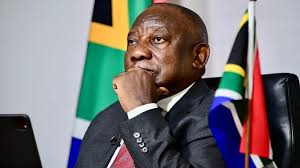
South African President Cyril Ramaphosa has warned against promoting claims of a “white genocide” abroad, saying the allegations are damaging the country’s international reputation and undermine efforts to attract investment at a time of high unemployment.
In his weekly letter to the nation, Ramaphosa said South Africa needed economic growth and investment to create jobs and criticised those who travel overseas to advance what he described as a false narrative.
“At a time when unemployment is high and we need to grow our economy and attract investment, travelling to foreign capitals to spread the falsehood of a ‘white genocide’ and discourage investment in one’s own country is neither responsible nor patriotic,” he said.
The president’s remarks come amid renewed international attention on claims by some Afrikaner groups that white South Africans, particularly farmers, are being systematically targeted through violent crime and discriminatory government policies.
The allegations have been amplified by activists and lobby groups abroad, especially in the United States.
The South African government has rejected the claims, maintaining that while violent crime remains a serious national problem, there is no evidence of a campaign to exterminate or systematically persecute white citizens.
Crime statistics show victims come from all racial groups in one of the world’s most unequal societies.
Ramaphosa linked the issue to South Africa’s broader democratic project, saying the country’s constitutional order was founded on non-racialism, equality, democracy and human dignity.
The comments come against the backdrop of tensions between Pretoria and Washington over issues including race relations, land reform and minority rights.
Recently, US Secretary of State Marco Rubio announced visa restrictions targeting foreign nationals linked to policies that Washington says involve uncompensated land seizures, race-based discrimination and the incitement of violence against minority groups in South Africa.
South Africa has rejected that characterisation, insisting its policies are aimed at addressing historical inequalities within the framework of the Constitution.
JN/APA