



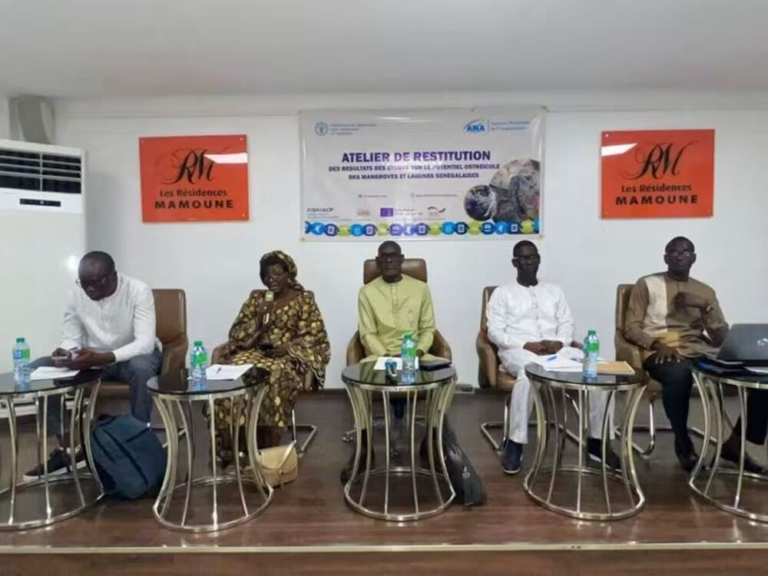
Senegal’s National Aquaculture Agency (ANA) presented the findings of a comprehensive year-long scientific assessment evaluating the oyster-farming potential of the country’s mangrove and lagoon ecosystems on Monday.
Conducted across 20 pilot sites in collaboration with the Food and Agriculture Organization of the United Nations (FAO) through the FISH4ACP program, the initiative evaluated key biological parameters for Crassostrea gasar, including growth rates, mortality metrics, and natural spat collection capabilities.
A central deliverable of the study is a newly developed cartographic atlas designed to pinpoint high-yield zones for oyster cultivation and guide targeted technical and financial investments. In Senegal, where domestic demand currently outstrips local supply, small-scale oyster harvesting serves as a primary source of livelihood for coastal communities, with women driving the harvesting, processing, and commercial trade. The research aims to support a controlled transition toward modernized aquaculture techniques, addressing natural spat collection bottlenecks while safeguarding fragile estuarine and mangrove ecosystems.
TE/Sf/lb/abj/APA