



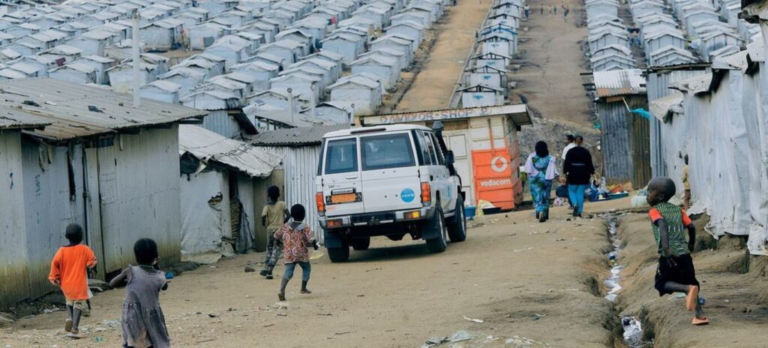
Deteriorating security conditions at the Kigonze displacement site in Bunia, the capital of Ituri province, are forcing thousands of families to flee and severely hampering humanitarian efforts to contain an escalating Ebola outbreak.
Hosting nearly 19,000 internally displaced persons, the camp has experienced severe security disruptions since September 20, including armed searches and gunfire that prompted many residents to seek refuge with host families, drastically reducing access for aid workers.
United Nations Humanitarian Coordinator Damien Mama warned that the uncoordinated dispersion of displaced families complicates disease surveillance, contact tracing, and the delivery of critical healthcare services. The UN emphasized the necessity of maintaining the civilian character of displacement sites, calling for safe, voluntary, and dignified conditions for affected populations. With more than 1.1 million people displaced across Ituri province due to ongoing armed conflict, restricted movement threatens to accelerate viral transmission across regional boundaries.
The operational setbacks occur as the Ebola epidemic—driven by the Bundibugyo strain—surpasses 8,000 confirmed cases for the first time, reaching 8,067 cases and more than 3,900 deaths, representing a case fatality rate of 48.4 percent. According to the World Health Organization, while case incidence in Ituri has gradually declined from its mid-August peak, high transmission rates and surging cases in neighboring North Kivu establish this outbreak as the largest and deadliest epidemic in the history of the Democratic Republic of the Congo.
TE/Sf/lb/abj/APA