



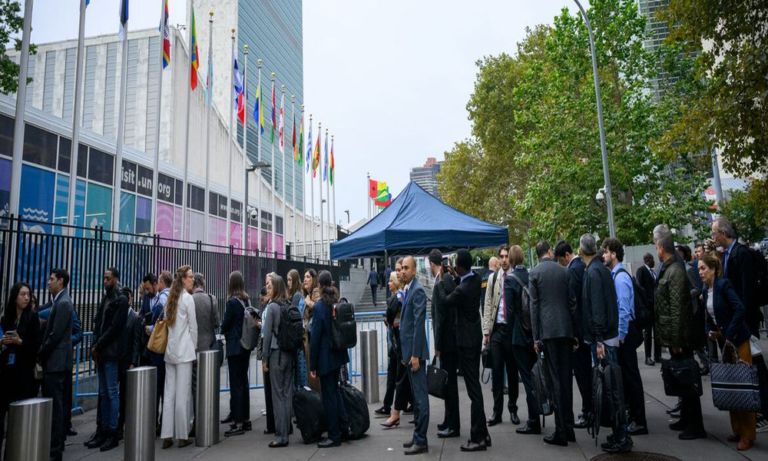
Addressing the United Nations General Assembly in New York, leaders from Francophone Africa united in criticizing an international order they view as outdated, calling for comprehensive reforms to the UN Security Council, sovereign control over natural resources, and an active role in shaping global governance for emerging technologies like artificial intelligence.
Speakers emphasized that global institutions established in 1945 fail to reflect modern geopolitical, digital, and economic realities, leaving African nations underrepresented in multilateral decision-making bodies.
Democratic Republic of the Congo Prime Minister Judith Suminwa Tuluka and representatives from Mali and Niger denounced the inconsistent application of international law and double standards in crisis resolution, arguing that selective enforcement undermines public faith in global multilateralism. Responses to these structural imbalances varied across the continent: while Mali, Niger, and Burkina Faso emphasized regional autonomy through the Confederation of Sahel States (AES) to reject external hegemony, Senegalese President Bassirou Diomaye Faye advocated for reforming multilateral institutions from within through a stronger, more representative United Nations and continued engagement with ECOWAS and the African Union.
Beyond institutional governance, leaders underscored economic and technological sovereignty as central to Africa’s future. Delegates from Equatorial Guinea and Guinea called for an end to raw material extraction in favor of localized refining and industrial value chains—pointing to major infrastructure initiatives like Guinea’s Simandou mining project—while the DRC urged international bodies to guarantee developing nations equitable access and voting power in establishing global standards for artificial intelligence.
DM/Sf/lb/abj/APA