





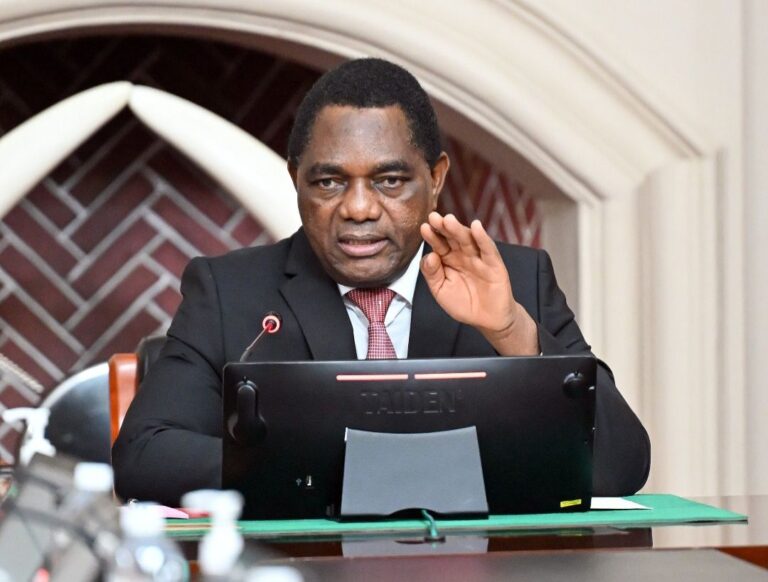
President Hakainde Hichilema has pledged that Zambia’s 13 August general elections will be peaceful and credible, saying it is in the government’s own interest to safeguard a process he described as essential to the country’s democratic reputation and business environment.
Speaking after a courtesy call by United Nations resident coordinator Beatrice Mutali and heads of UN agencies, Hichilema said his administration was committed to ensuring a transparent electoral process as Zambia heads toward a high‑stakes vote that will determine the country’s political direction for the next five years.
He said credible elections were vital not only for democracy but also for economic stability, warning that polls can either strengthen or disrupt the business climate.
“We have to make sure it is like that; it is important for our democratic credentials and it is important for the conduct of business activities,” he said, adding that elections “must not negate the gains that we have made” since his administration took office.
Hichilema said the outcome of the election was secondary to the integrity of the process.
“The country is more important; we move on. People will decide what they want,” he said.
He thanked the UN for its continued support to Zambia’s electoral preparations, saying elections were “a process” already underway through ongoing technical work with national institutions.
He described the UN as a “true partner,” particularly at a time when global instability and a drift away from a rules‑based international order were of concern to African countries.
Mutali said the UN would continue working closely with the Electoral Commission of Zambia to strengthen the integrity, inclusivity and credibility of the upcoming polls, including addressing recommendations from the previous electoral cycle.
Zambia’s 2026 general elections will see voters choose a president, members of parliament and local government leaders.
The polls come amid economic pressures, ongoing debt restructuring efforts and heightened political competition, making the credibility of the process a central concern for both domestic stakeholders and international partners.
JN/APA