





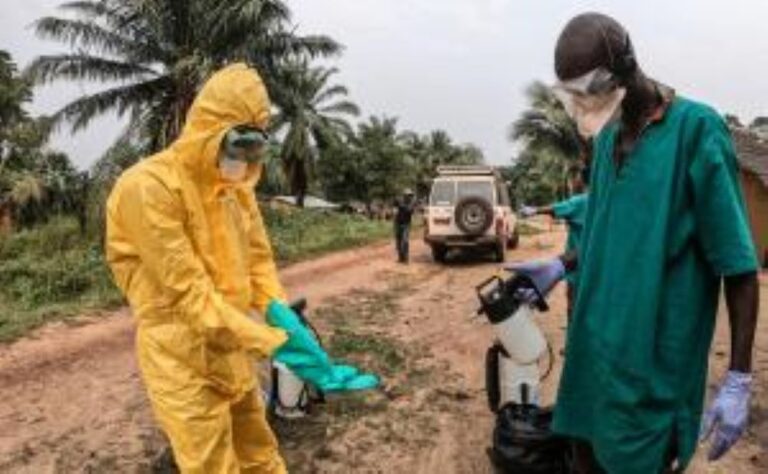
Kenya has confirmed its first Ebola infection after its citizen, who had been living in the Democratic Republic of Congo (DRC) for seven years, died in Nairobi, Health Minister Aden Duale said on Tuesday.
The person fell ill in the DRC where he had been living, and was treated at several health facilities there.
Duale said the patient then travelled by road to Kampala, Uganda through Beni on 2 October 2026, and flew to Nairobi, arriving on 3 October 2026. On arrival, the patient was transported to a hospital in Nairobi and was quickly isolated.
Duale said samples tested positive for Bundibugyo virus at both the National Virology Reference Laboratory and the Kenya Medical Research Institute.
“Despite supportive care, the patient died on the night of 5 October 2026 and was buried on 6 October 2026 in line with the country’s Ebola safe and dignified burial protocol,”
The person had been ill for about a month and received treatment at several hospitals in DR. Congo before travelling by road to Uganda and then flying to Nairobi, Duale said.
He arrived in Nairobi on Saturday and passed routine screening at the city’s main airport before being taken to hospital by a relative. He was later moved to an isolation facility, where tests confirmed he had Ebola caused by the Bundibugyo virus, the minister said.
The patient died late on Monday and was buried on Tuesday under public health protocols, Duale said.
Kenyan authorities have identified 28 contacts, including relatives and healthcare workers, and are tracing 23 passengers and four crew members who were on the same flight.
The Kenyan government has increased surveillance at airports and border crossings and urged health workers to maintain strict infection prevention measures.
The government of Kenya notified WHO of the case in line with the International Health Regulations (2005) on 6 October 2026. Kenya is the fourth country to confirm BVD.
The Democratic Republic of the Congo is responding to an ongoing BVD outbreak, while Uganda, where the Bundibugyo virus species was first detected in 2007, ended the latest outbreak in August 2026.
Most cases in Uganda were imported from the Democratic Republic of the Congo and the remaining few were locally acquired among contacts and health workers linked to imported cases. France reported a travel-related case of BVD in June 2026.
Health authorities in Kenya have so far listed 28 contacts, including family members and health workers who cared for the patient.
They are also tracing 23 passengers and four crew members from the same flight, with arrangements underway for appropriate follow-up and quarantine of people assessed to be at risk.
“We’re supporting the ongoing efforts to strengthen the response, and with rapid and coordinated action, we can prevent the virus from gaining a foothold and stop a potential larger outbreak in Kenya,” Mohamed Janabi, WHO Regional Director for Africa, was quoted as saying.
MG/as/APA