





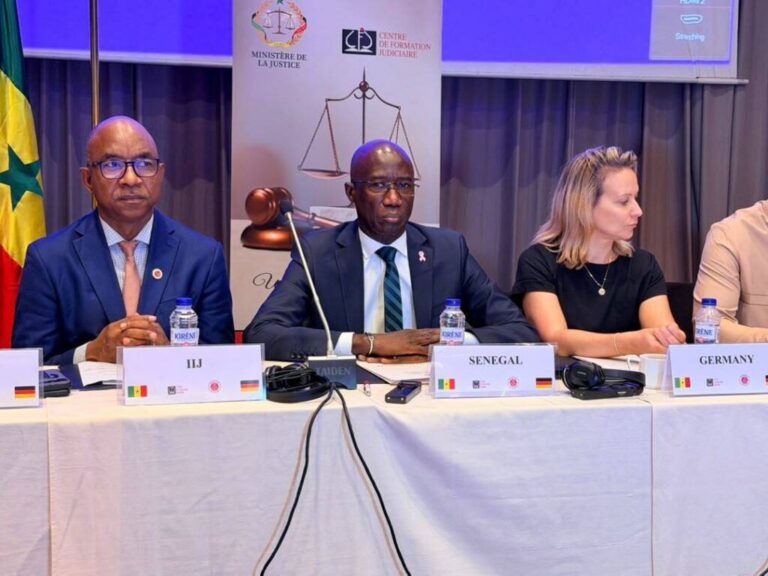
Faced with the spread of the terrorist threat from the Sahel to coastal nations, Senegal aims to strengthen the link between military operations and judicial proceedings.
Africa’s westernmost nation is doing this by improving the collection, preservation, and use of intelligence gathered from the battlefield.
The use of battlefield intelligence in the fight against terrorism is the focus of a regional workshop that opened on Tuesday in Dakar, bringing together magistrates, investigators, experts, and officers from fourteen West African and neighbouring countries.
Senegal’s Minister of Justice and Keeper of the Seals, Moussa Sarr, emphasised the need to better ensure the transition of evidence “from the battlefield to the courtroom.”
Phones, computers, documents, weapons, or biometric data seized during operations can be crucial to investigations, yet their judicial value depends on the traceability of their collection, preservation, and transmission.
“A case is only as strong as its evidence,” the minister declared, calling for better coordination among defence forces, investigators, and magistrates.
He stressed three imperatives: combating impunity, guaranteeing the admissibility of evidence, and upholding the rights of the defence.
Judicial cooperation is also essential in a context marked by the expansion of the terrorist threat from the Sahel toward coastal countries.
Evidence collected in one country can prove decisive for an investigation conducted in another.
Through this workshop – organised with the International Institute for Justice and the Rule of Law and supported by Germany – Senegal aims to foster common practices for the better preservation, sharing, and utilization of materials gathered during counter-terrorism operations.
The goal is to ensure that evidence collected in the field can withstand judicial scrutiny, provided the necessary legal conditions are met.
TE/Sf/fss/as/APA