





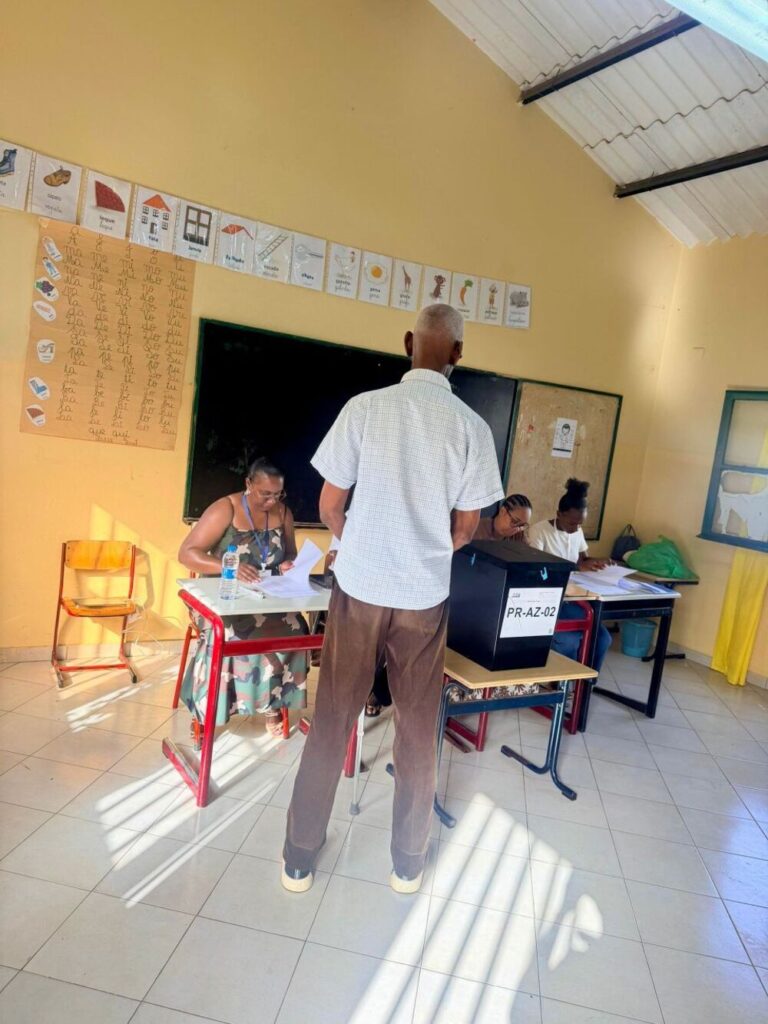
The African Party for the Independence of Cape Verde (PAICV), the main opposition party on the island, won the parliamentary elections held over the weekend, marking a new shift in political leadership.
This call was made according to provisional results published overnight Sunday, covering nearly 98% of polling stations.
With approximately 46% of the votes cast and 33 out of 72 seats in the National Assembly, the historic party came out on top and is poised to lead the next government.
Its leader, Francisco Carvalho, who is also the mayor of Praia, claimed victory on Sunday evening. He hailed the voters’ choice in favour of a “Cape Verde for all” and a “change of political direction.”
According to Cape Verde’s parliamentary system, the party that wins the most seats in the legislative elections is responsible for nominating the prime minister, who heads the executive branch.
President Jorge Carlos Fonseca, or his successor depending on the current term, plays the role of institutional arbiter and guarantor of the continuity of the state.
Outgoing PM Ulisses Correia e Silva, leader of the Movement for Democracy (MPD), conceded defeat and congratulated his opponent.
In power since 2016, his party came in second and lost its parliamentary majority after two consecutive terms.
Provisional results still allow the PAICV to reach the absolute majority of 37 seats required, depending on the final counts, particularly those from the diaspora and some polling stations still
being validated.
The Cape Verdean Independent and Democratic Union (UCID), the country’s third-largest political force, obtained two seats, according to partial data from the electoral commission.
Located approximately 600 kilometers off the coast of Senegal, Cape Verde is often described as one of Africa’s most stable democracies.
Since the introduction of multiparty politics in 1991, the country has experienced several peaceful transfers of power without major electoral tensions. This new political shift opens a transitional
phase pending the final results and the formation of the next government.
The political calendar will continue with the presidential election scheduled for November, in which the incumbent president is running for re-election.
TE/fss/as/APA