



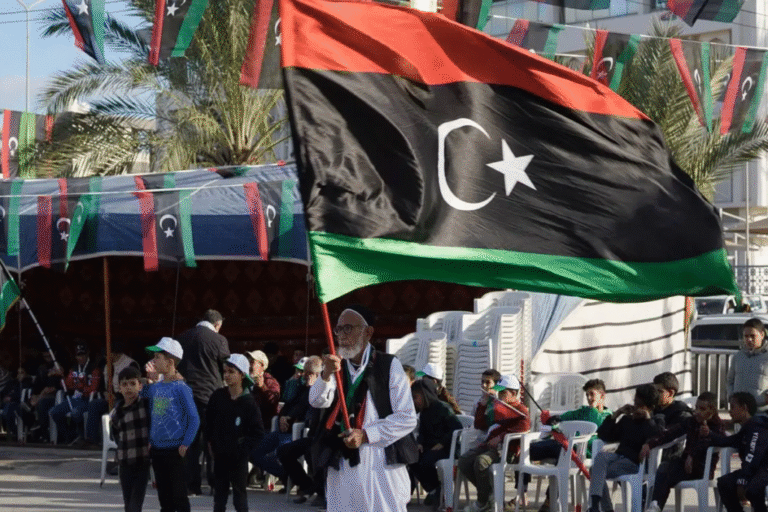
More than ten years after the fall of Muammar Gaddafi, Libya remains caught in a state of turmoil.
Hopes for reconstruction have been stifled by political rivalries, the influence of powerful militias, and the mismanagement of its vast oil resources.
Although a 2020 ceasefire ended the main conflict, it did not heal the deep divisions that plague the country. Daily life for Libyans is still marked by insecurity, poverty, and corruption. A fragile central government struggles to assert its authority, leaving the country vulnerable to renewed fighting.
Libya is divided between two rival governments: The UN-recognized Government of National Unity (GNU) in Tripoli, led by Abdul Hamid Dbeibeh. The Government of National Stability in Benghazi, supported by Field Marshal Khalifa Haftar and the House of Representatives.
This political split has blocked any chance of holding elections, leading to widespread mistrust and a paralyzed government. Foreign powers, who often back one side or the other, have only made the fragmentation worse.
With nearly 48 billion barrels in reserves, Libya has some of the largest oil resources in Africa. However, this wealth, which should be financing reconstruction, is instead fueling the conflict. Oil fields are controlled by militias, and the revenue is used to fund political factions. The profits largely benefit foreign companies and armed groups, while ordinary citizens are left out of the economic benefits of their own country’s resources.
International mediation, particularly from the UN, has so far had little impact. The country’s future depends on whether its leaders can bridge their differences, agree on an electoral framework, and use the oil revenue for reconstruction instead of war.
MK/ac/fss/abj/APA