





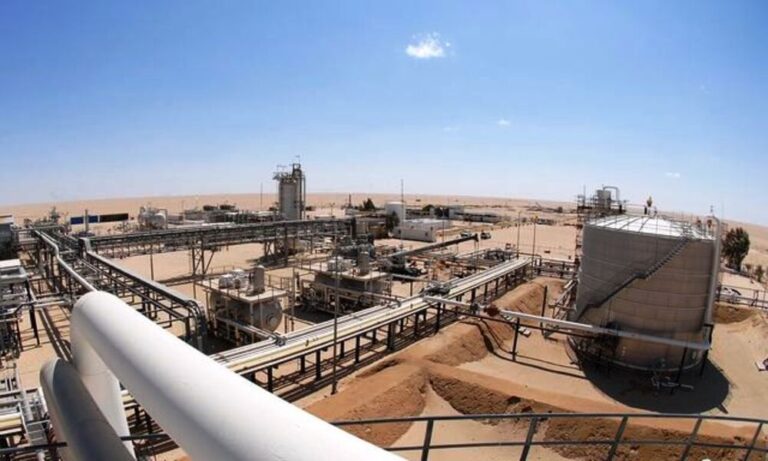
Libya’s National Oil Corporation has unveiled an ambitious modernisation plan aimed at nearly doubling the country’s refining capacity, amid a heavy reliance on fuel imports and persistent structural weaknesses in the sector.
The NOC announced a plan to increase daily output to 660,000 barrels per day (bpd), up from the current theoretical capacity of 380,000 bpd. The information was made public by NOC Chairman Masoud Suleiman in a post on his official Facebook page.
According to Mr. Suleiman, increasing domestic fuel production is “one of the essential pillars” of improving Libya’s economy.
He painted a stark picture of the state of existing infrastructure, emphasising that the country’s refineries rely on rudimentary designs, outdated technologies, and production levels far below local market demand.
Libya has five main refineries with a combined capacity of 380,000 barrels per day (bpd). However, actual production currently does not exceed 180,000 bpd, largely due to the Ras Lanuf refinery being shut down since 2013. This situation has created a structural gap between domestic supply and consumption, increasing the country’s dependence on heavily subsidized and costly fuel imports.
The plan presented by the NOC is based on several pillars: modernizing existing refineries, progressively
increasing their capacity, constructing a new refinery, and reviving the Southern Refinery Project.
According to the company’s management, these investments would significantly increase domestic fuel production, reduce imports, and improve the overall economic viability of the oil sector.
Masoud Suleiman also outlined medium- and long-term goals, indicating that the development of the refining industry could enable Libya to achieve self-sufficiency in gasoline by 2037, cooking gas by 2033, and diesel by 2034.
These objectives, presented as fundamental, aim to sustainably stabilize the local market and strengthen the oil sector’s contribution to national development.
However, these projections are set against a backdrop of significant constraints: political instability, outdated infrastructure, and high needs for financing and technical expertise.
The NOC assures, however, that these challenges will not hinder its efforts to build a more efficient and sustainable oil sector, serving the citizens and the Libyan economy.
MK/AK/fss/as/APA