





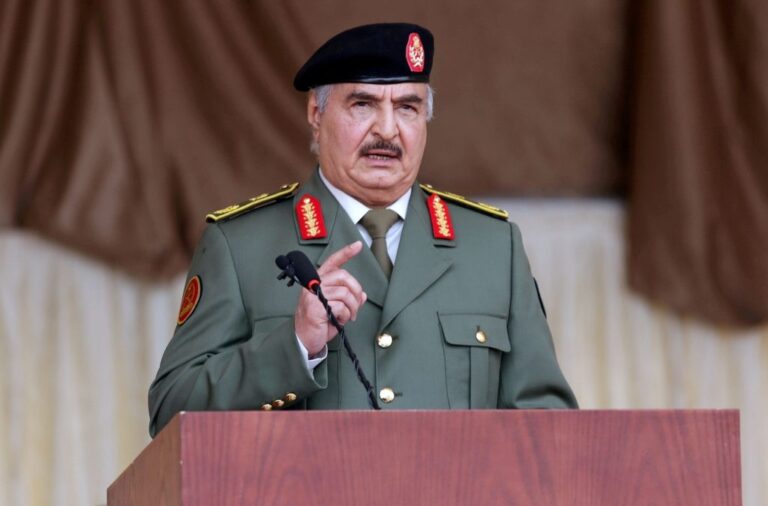
Khalid Haftar is stepping up efforts to bridge Libya’s East–West divide with the announcement of a new joint force aimed at combating terrorism and illegal migration.
Khalid Haftar, Chief of Staff of the Libyan Arab Armed Forces led by Field Marshal Khalifa Haftar in eastern Libya, met on Monday with several military and security leaders from Misrata — the western stronghold — to agree on the creation of a “joint force tasked with fighting terrorism and illegal migration”.
This is according to a statement released by Khalid Al-Mahjoub, Director of Moral Guidance for Haftar’s forces.
The meeting also resulted in an agreement to “end media escalation” between rival factions, which was described as detrimental to “the interests of the Libyan people.”
Al-Mahjoub said the meeting was part of an internal reconciliation effort conducted “free from foreign interference,” amid persistent tensions between eastern command structures and western armed groups. He added that Khalid Haftar stressed the importance of building a lasting “bridge of communication” between regions, noting that Misrata “retains a central role in national stability” and has the capacity to “counter any attempt at division.”
During a separate meeting on Sunday with elders from central Libya, Khalid Haftar had already called for “united efforts to halt the worsening political and security crisis” that has gripped the country since the 2011 fall of Muammar Gaddafi. The field marshal’s son is increasingly positioning himself as a key interlocutor in efforts to reunify Libya’s long-divided military institutions.
However, the Agency for Combating Terrorism and Extremism denied on Monday that its representatives had taken part in the “alleged meeting” in Sirte, referring to reports of talks between Misrata commanders and Khalid Haftar. It dismissed the claims as “baseless rumors,” insisting that any such contacts were “individual acts” not representative of the institution.
In a statement, the agency urged “verification of information” circulated on social media and reaffirmed its commitment to “confront anyone seeking to sow discord or undermine the reputation of Libya’s security forces.” The clarification underscores the sensitivity of such rapprochement efforts between factions in a political landscape still divided between the east, controlled by Khalifa Haftar, and the west, under the Tripoli-based government.
MK/ak/sf/lb/as/APA