





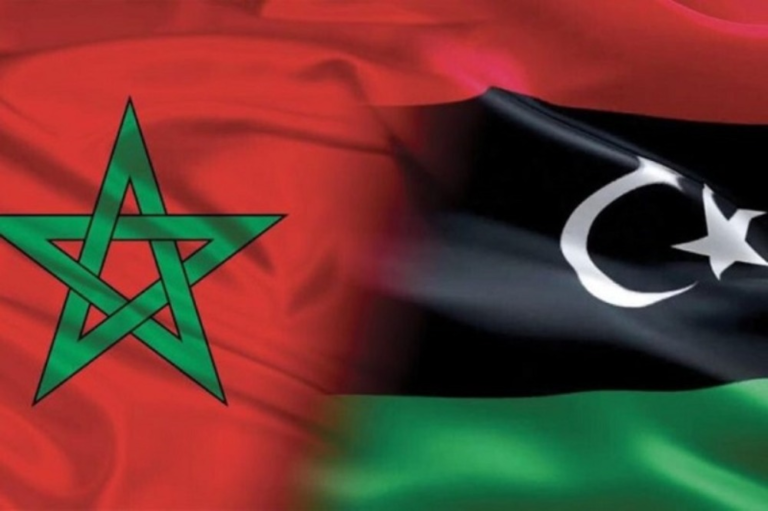
Libya and Morocco have signed a cooperation agreement in Rabat aimed at promoting exports, encouraging reciprocal investment, and strengthening business ties between companies in both countries, as part of broader efforts to revive economic relations in the Maghreb.
The Libyan Export Development Authority (LEDA) and Morocco’s Investment and Export Development Agency (AMDIE) signed a memorandum of understanding designed to enhance economic cooperation between the two nations. This strategic agreement focuses on export promotion, the facilitation of bilateral investment, and improved support for companies seeking access to both markets.
Under the terms of the memorandum, the two institutions will work jointly to organize trade missions, business fairs, and specialized training programs. They will also carry out joint market studies and strengthen the exchange of economic information in order to improve mutual understanding of business opportunities. The initiative comes at a critical time as Libya actively seeks to diversify its economy beyond hydrocarbons and attract greater investment in infrastructure, logistics, manufacturing, and services. Morocco, for its part, brings recognized expertise in export promotion, foreign investment attraction, and integration into African, European, and Middle Eastern markets.
Both agencies emphasize that institutional cooperation must now translate into concrete, lasting partnerships between private-sector operators. Libyan companies could benefit significantly from Moroccan expertise in logistics, industrial organization, and market development, while Moroccan firms may find major new opportunities in Libya’s reconstruction, energy, transport, and services sectors. Beyond bilateral ties, the agreement is also presented as a meaningful contribution to strengthening economic exchanges within the Maghreb, where intra-regional trade remains limited despite geographic proximity and strong economic complementarities. Analysts frequently point to the untapped potential of Maghreb trade, which has historically been hindered by logistical constraints and the limited implementation of regional cooperation frameworks.
The effectiveness of the agreement will ultimately depend on its implementation. Both sides consider that trade missions, business meetings, and investment projects stemming from the partnership will serve as the key indicators of success. For Libya, the primary goal is to strengthen its integration into North African trade networks, while for Morocco, the objective is to access a rebuilding market offering significant opportunities for its companies.
MK/AK/Sf/lb/abj/APA