





The United States has reaffirmed its support for efforts to reunify Libya’s economic, security and political institutions, while leaving the modalities of any potential agreement to national actors.
The United States supports the steps taken to unify Libyan institutions, which have been divided for several years between competing authorities and structures, said US presidential advisor Massad Boulos on Sunday, August 16.
Speaking on the Al-Hurra television channel, the American official indicated that Washington intends to contribute to strengthening the country’s security and stability, with the goal of making Libya a lasting partner of the United States.
According to Boulos, the precise modalities of an agreement on the unification of economic, political, and security institutions must, however, be determined by the Libyans themselves.
Washington thus intends to prioritize a facilitating role rather than imposing an institutional framework.
According to him, the US authorities remain in contact with key Libyan actors in order “to facilitate and encourage their efforts.”
Institutional reunification remains one of the main obstacles to the lasting stabilization of Libya. The country continues to be marked by the coexistence of rival power centres and by divisions affecting both political institutions and security structures.
Economically, this fragmentation also complicates the unified management of public resources and the oil sector, the country’s main source of revenue and foreign exchange.
When asked about the prospect of presidential and parliamentary elections, Massad Boulos affirmed that the United States remains committed to dialogue with all Libyan parties in order to support a path that could lead to lasting peace.
Holding national elections has been at the heart of the political process for several years, without a definitive compromise being reached on the institutional and legal framework necessary for their organization.
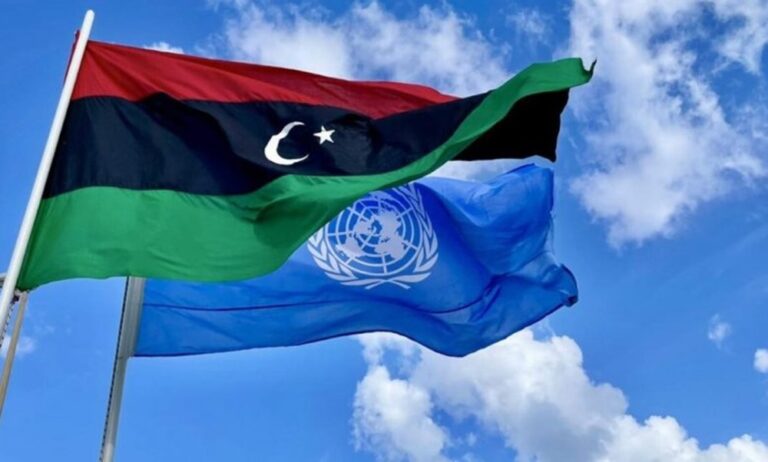
Washington also states that it is working in close coordination with the Special Representative of the UN Secretary-General for Libya, Hanna Tetteh, as well as with its international partners.
The stated objective is to consolidate the progress already achieved and to prevent a further deterioration of the political process.
This American stance comes as Libya continues to face a fragile political and security situation. For both Washington and the United Nations, the unification of institutions appears to be a crucial step in restoring coherent public authority, preparing for credible elections and reducing the risk of renewed confrontations between the various power centres.
MK/AK/Sf/fss/gik/APA