



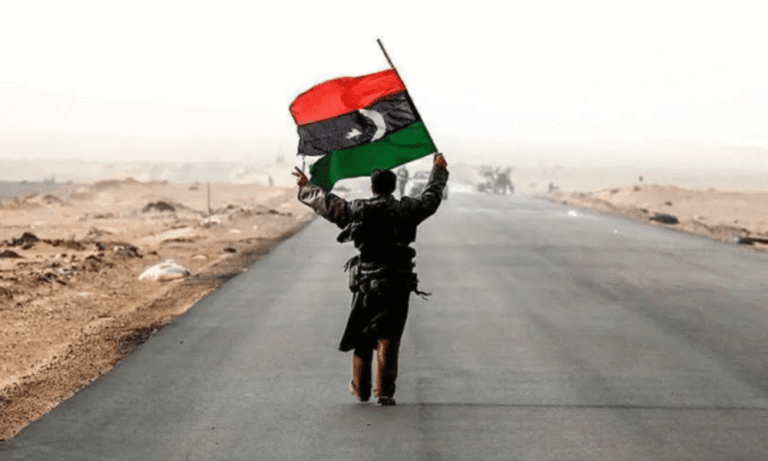
Fourteen years after the fall of Muammar Gaddafi, Libya is experiencing a notable economic recovery driven by increased oil production and a resurgence of foreign investment.
However, this economic improvement is built upon a precarious and deliberately frozen political balance, raising concerns about the country’s long-term stability.
Libya’s domestic oil production has recently reached 1.3 million barrels per day, attracting new exploration contracts with major international companies like BP, Shell, and ExxonMobil. While these oil revenues are bolstering the Central Bank in Tripoli and supporting some public spending, a significant portion is being diverted through opaque channels, including overpriced contracts, fictitious salaries, and networks controlled by various militias.
Despite the economic uptick, the country continues to face severe challenges. Essential infrastructure remains dilapidated, inflation is high, and chronic fuel shortages persist. With over 90% of public revenue dependent on hydrocarbons and a lack of credible reforms, the recovery is inherently fragile.
Politically, Libya remains divided between two rival authorities: the government in Tripoli, which is supported by the UN and Turkey, and the government in Benghazi, backed by Khalifa Haftar with the support of Russia and Egypt. The UN’s electoral roadmap has stalled, and sporadic violence between rival militias continues to flare up. This ongoing inertia benefits the armed groups and ruling clans that profit from public subsidies, trafficking, and controlled public procurement.
Foreign actors play a key role in maintaining this unstable equilibrium. Turkey provides weapons and advisors to the Tripoli-based government, while Russia, through its Africa Corps, strengthens its presence in the east. Egypt and the United Arab Emirates continue to support Haftar. Neighboring countries, prioritizing their immediate security and economic interests, have largely failed to forge a common strategy to stabilize the country.
This fragile order could be disrupted at any time by a new oil crisis, a diplomatic breakdown, or an escalation of clashes. While oil revenue currently ensures the circulation of money, it is doing so without building the strong, unified institutions needed to guarantee Libya’s long-term stability.
MK/Sf/ac/fss/abj/APA