





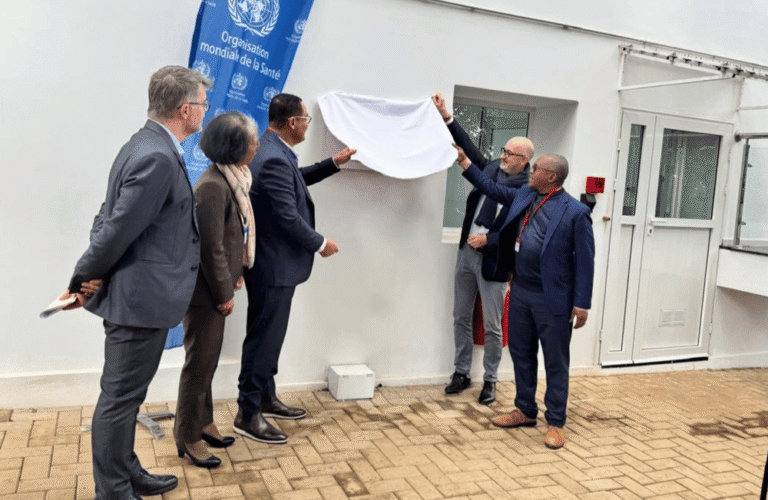
Madagascar has commissioned a state-of-the-art polio laboratory in Antananarivo,
strengthening its fight against the virus and solidifying its regional leadership in disease surveillance.
The facility, hosted at the Institut Pasteur de Madagascar, is fully accredited by the World Health Organisation (WHO) and equipped to conduct viral isolation, intratypic differentiation and environmental surveillance.
It was formally handed over to national authorities on Monday, symbolising a shift toward country-led, sustainable polio monitoring.
“This commissioning symbolises our collective commitment. It brings us closer to a future where no child in Madagascar – or anywhere – is at risk of polio,” said Nely Alphonse José, head of plague, emerging and neglected tropical disease control department at the Ministry of Public Health.
Since its establishment in 2023, the laboratory has significantly enhanced Madagascar’s capacity to detect poliovirus through acute flaccid paralysis and environmental sampling.
Between 2022 and 2024, it confirmed over 40 cases of circulating variant poliovirus type 1, enabling swift immunisation campaigns that helped halt the outbreak.
In May 2025, Madagascar marked two years without new detections, leading to the formal closure of the outbreak.
WHO representative Laurent Musango hailed the laboratory as a “regional resource,” noting its strategic importance in combating poliovirus transmission in Madagascar’s neighbourhood.
“With strengthened capacity and cutting-edge technology, Madagascar is now even better positioned to lead the charge against poliovirus transmission in Eastern and Southern Africa,” Musango said.
The facility also features Nanopore sequencing technology, allowing real-time genomic analysis and eliminating delays previously caused by shipping samples abroad.
Supported by WHO and the Gates Foundation, the laboratory has undergone IT upgrades, staff training and environmental site optimisation to meet the objectives of the Global Polio Eradication Initiative.
JN/APA