



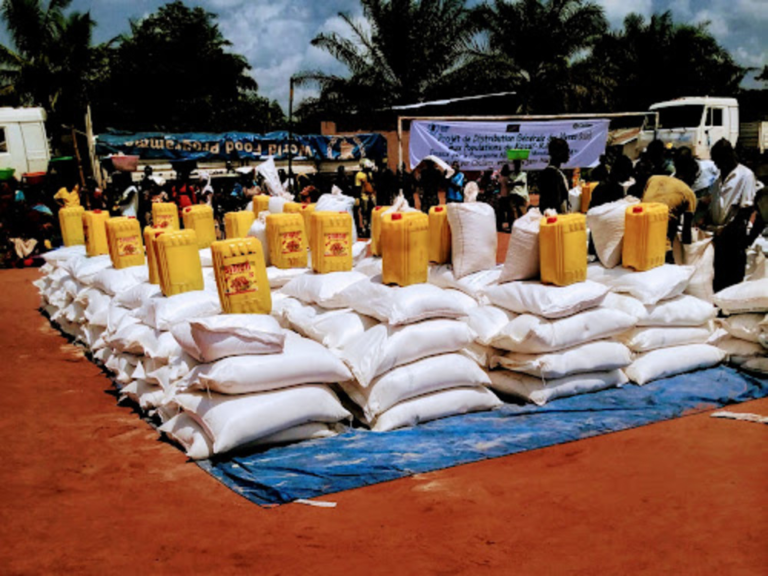
The World Food Programme (WFP) faces a critical $73.6 million funding shortfall in Mali, securing only $7.6 million of the $81.2 million required to sustain emergency operations through February 2027.
The severe resource deficit has already forced drastic cutbacks in direct food aid and nutritional programs, with the agency warning that the United Nations Humanitarian Air Service (UNHAS) could be forced to suspend operations entirely by January 2027 unless additional international contributions are secured.
The operational scaling back comes after approximately 1.5 million people experienced acute food insecurity during the 2026 lean season between June and August. A June assessment revealed that while 40 percent of households required urgent humanitarian intervention, only 4 percent had received support in the preceding three months. Funding constraints left over 200,000 vulnerable individuals without assistance in 2026, while direct food support durations were halved from six months to three. Deepest impacts are concentrated in the conflict-affected regions of Ménaka, Gao, Timbuktu, Mopti, and Ségou, where the country accommodates over 400,000 internally displaced persons and more than 290,000 refugees.
The resource crisis extends to critical logistics and specialized health interventions across the country. UNHAS flights, which transported more than 3,600 passengers and 42.5 tonnes of cargo for nearly 100 humanitarian organizations in the first half of 2026, represent a vital link to isolated districts like Ménaka and Ansongo where land transit is severely impaired by security risks. Simultaneously, targeted coverage for malnutrition treatment and prevention programs fell from 459,000 individuals in 2025 to 206,000 in 2026, raising concerns that acute malnutrition rates could surpass the 15 percent emergency threshold in northern Mali. Across the broader Central Sahel region, WFP is seeking $151 million to assist 5.6 million people facing crisis-level food insecurity across Mali, Burkina Faso, and Niger through early 2027.
MD/te/Sf/lb/abj/APA