





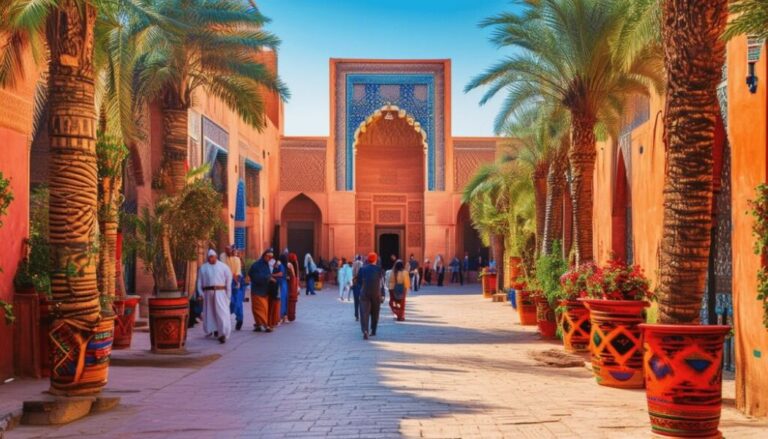
The htel industry in the Moroccan cities of Marrakech and Casablanca are witnessing intense pressure thanks to an influx of global chains and a proliferation of tourism expansion schemes.
This also coincides with the industry’s rapid restructuring.
Morocco is seeing a marked increase in investment from major international hotel chains, with a particular concentration in Marrakech and Casablanca, according to recent industry data.
Driven by record tourism figures and a dynamic of large-scale projects, the country is establishing itself as one of Africa’s most attractive markets for upscale hotels, as it approaches the international deadlines of 2030.
Extending this trend, industry stakeholders are highlighting a structural transformation of the tourism landscape, supported by a growing supply and an acceleration in construction starts. Nearly 19.8 million tourists were welcomed in 2025, generating approximately 138 billion dirhams in revenue – levels that reinforce the appeal of the kingdom’s main urban destinations for foreign investors.
In this context, major international groups favour a model based on management contracts, in which local investors finance the infrastructure while foreign brands handle operations and marketing.
This arrangement allows them to limit their financial exposure while capturing a significant share of the value through brands, booking networks, and royalties.
This dynamic is gradually reshaping the national tourism landscape. Marrakech, already highly structured, is facing an intensification of the high-end offering and pressure on its accommodation capacity.
Casablanca is establishing itself as a growing hub for business tourism, supported by international-standard hotel projects.
Rabat, for its part, is moving towards a premium positioning linked to its urban transformation.
However, this expansion raises questions about the distribution of economic benefits. The current model, largely driven by foreign operators, calls into question the local economy’s ability to capture
a substantial share of the generated profits. The anticipated effects on employment and skills development coexist with risks of increased dependence on international standards and globalized value chains.
In light of these developments, the question of balancing international attractiveness with local roots emerges as crucial.
The concentration of investments in Marrakech and Casablanca confirms the attractiveness of the Moroccan market, while also highlighting potential tensions between rapid sector growth and preserving national added value.
MK/AK/Sf/fss/as/APA