





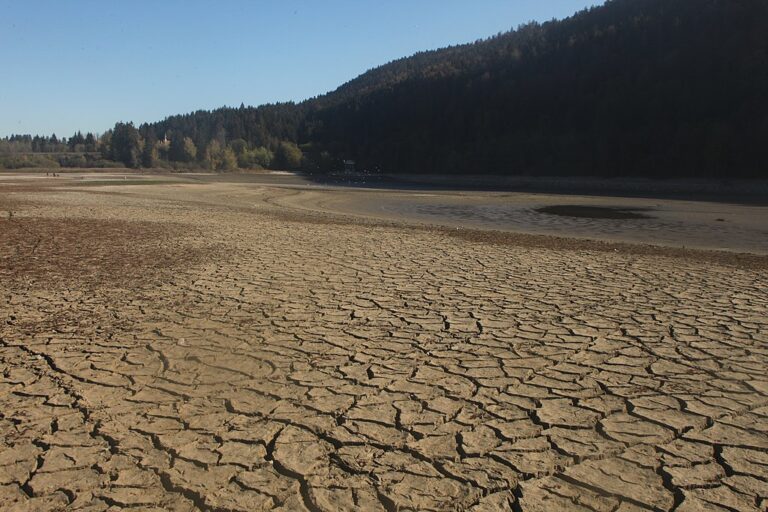
G7 environment ministers meeting in Paris, acknowledged desertification, land degradation, and drought as major drivers of instability, calling for accelerated soil restoration and increased funding ahead of COP17 in Mongolia.
The G7 countries officially recognised land degradation and drought as global systemic challenges and risk multipliers for security at the conclusion of the ministerial meeting on the environment held in Paris from April 23 to 24.
In their joint statement, received by APA on Monday, the ministers emphasised that these environmental crises are already weakening ecosystems, threatening livelihoods, and exacerbating food and water insecurity, with growing repercussions for economic stability and peace, particularly in fragile or conflict-affected regions.
They emphasised the increasingly evident link between land degradation and security, arguing that environmental pressures intensify competition for natural resources, facilitate population displacement, and increase the risk of instability.
According to data cited in the report, more than 40% of internal conflicts over the past six decades are linked to disputes over natural resources, particularly land and water.
Furthermore, up to 40% of the world’s land is already degraded, at an estimated annual cost of $900 billion. The Executive Secretary of the United Nations Convention to Combat Desertification (UNCCD), Yasmine Fouad, welcomed this political recognition while calling for concrete action.
“Land degradation and drought are no longer marginal issues. They are already shaping the daily lives of millions of people,” she stated, adding that restoring land is “an investment in long-term peace, resilience, and stability.”
Ms. Fouad also noted a lack of implementation rather than a lack of knowledge. “Countries have
already identified their priorities. The challenge now is to achieve real progress on the ground,” she emphasised.
Approximately 3.2 billion people currently live in areas affected by land degradation, which is increasing pressure on food systems, incomes, and social cohesion.
Faced with this situation, G7 ministers deemed current funding insufficient and fragmented, advocating for better mobilisation of public and private capital. The French G7 presidency announced several initiatives to this end, including the Nature & People Finance Alliance, designed to increase investment in nature and ecosystems.
Attention is now turning to the 17th Conference of the Parties to the UNCCD (COP17), scheduled for August 2026 in Mongolia, which is being presented as a crucial milestone for translating political commitments into tangible results.
ARD/te/Sf/fss/as/APA