



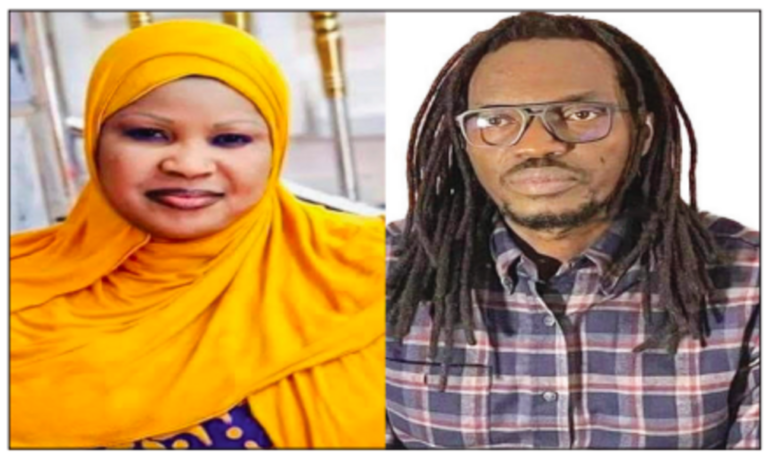
The Criminal Chamber of the Bamako Court of Appeal on Monday sentenced high-profile commentator Mohamed Youssouf Bathily, widely known as Ras Bath, and activist Rokia Doumbia, alias Rose Vie Chère, to ten years in prison with three years suspended—effectively resulting in seven years of firm imprisonment—alongside a fine of 240,000 CFA francs each.
Following a week of judicial deliberations, the court delivered the verdict on charges that included criminal association and undermining the credibility of the state through information and communication technologies, though the exact breakdown of the charges will be fully detailed in the court’s forthcoming written ruling.
The trial, which opened on August 10, 2026, under heavy security and high public interest, centered heavily on two appearances by Doumbia on Ras Bath’s show, “Le Grand Dossier.” During the broadcasts, Doumbia spoke out against severe power outages and the soaring cost of basic commodities facing ordinary Malian households. While state prosecutors argued the broadcasts represented a deliberate, coordinated campaign to discredit transitional authorities and incite public unrest, defense counsel maintained that Doumbia was merely a trader highlighting economic hardship and that Ras Bath was operating within a journalistic capacity. Prosecutors also brought up past statements by Ras Bath regarding the March 2022 death in custody of former Prime Minister Soumeylou Boubèye Maïga.
Both defendants have already spent extended periods behind bars prior to this ruling, with Ras Bath held since March 2023 and Doumbia detained following a viral video on social media. Human rights groups, including the International Federation for Human Rights and the World Organisation Against Torture, had previously denounced their prolonged pre-trial detentions and demanded their release. Under Malian law, the time already served in pre-trial custody will be deducted from their active sentences, though prison authorities must calculate the precise remaining duration. Defense lawyers, who had sought full acquittals due to a lack of evidence proving criminal collusion, have not yet confirmed whether they will appeal the decision to the Supreme Court.
MD/te/lb/abj/APA