



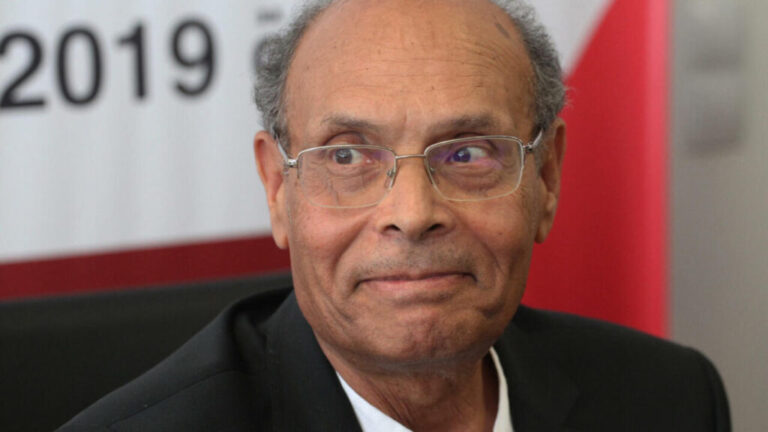
On the 15th anniversary of the Tunisian revolution, former President Moncef Marzouki delivered a scathing assessment of the country’s trajectory, declaring that the 2011 popular uprising has failed to achieve its core objectives.
Tunisia commemorated the milestone on Tuesday, December 17, 2025. The revolution, which began in 2010 with the self-immolation of Mohamed Bouazizi in Sidi Bouzid, originally sparked the “Arab Spring” and led to the ousting of long-time dictator Zine el-Abidine Ben Ali. However, 15 years later, Marzouki describes a nation slipping back into authoritarianism.
In an interview with RFI, Marzouki—the country’s first democratically elected president after the revolution—stated that the hopes of 2011 have been “progressively dashed.” Currently living in exile, he argued that Tunisia is in a “worse situation than before the revolution,” citing the decline of civil liberties and political repression, a concentration of power within the executive branch, a persistent and deepening socio-economic crisis marked by high inflation and unemployment.
Marzouki noted that while the revolution was born from a desire for “dignity and jobs,” the political transition failed to build lasting institutions capable of meeting social expectations. He pointed to institutional gridlock and the inability of political elites to tackle systemic poverty, regional inequalities, and corruption as the primary reasons for the democratic experiment’s fragility.
The former president was particularly critical of the current administration under Kaïs Saïed, who has been in power since 2019. Marzouki believes the suspension of Parliament in 2021 and the 2022 constitutional reforms have effectively dismantled the democratic gains of the last decade, replacing them with “rule by an iron fist.”
The 15th anniversary arrives at a time of high tension. While supporters of President Saïed rallied in the capital to back his “purge” of what he calls a corrupt elite, opposition groups and rights organizations continue to protest against what they describe as an unprecedented crackdown on dissent.
Despite his bleak outlook, Marzouki maintains that the “spirit of the revolution” is not dead. He suggests that as long as economic frustrations remain unresolved, the potential for new popular mobilizations remains. Today, the record of the Jasmine Revolution stands as a complex mix of symbolic freedom and a struggle for tangible stability.
MK/ak/ac/fss/abj/APA