





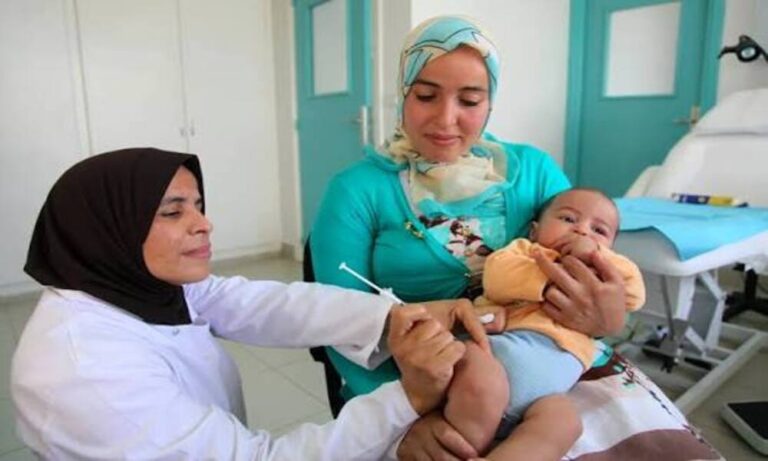
The UNICEF Morocco office has signed a strategic partnership with the Korean International Cooperation Agency (KOICA) to improve maternal and child health and nutrition in the country’s most vulnerable rural areas.
The five-year project (2025–2029), with a total budget of $11.7 million, will be implemented under the leadership of Moroccan authorities in the Béni Mellal-Khénifra region. It aims to reduce preventable maternal, newborn, and child morbidity and mortality, with a special focus on the first 1,000 days of life, a critical period for child development.
The initiative will directly benefit 15,500 pregnant and breastfeeding women and 125,000 children under five each year, while strengthening the capacities of 200 health professionals annually and engaging 390 community health workers. Indirectly, more than 1.3 million people in rural areas will benefit from the interventions.
Laura Bill, UNICEF Representative in Morocco, highlighted that the partnership will accelerate progress in maternal and child health and support Morocco’s efforts to achieve the Sustainable Development Goals. She noted that the intervention models developed could later be scaled up nationally in collaboration with local partners.
Hyewon Cho, KOICA Country Director, emphasised that the project demonstrates Korea’s commitment to supporting Morocco’s health system, providing technical assistance alongside UNICEF to implement an effective rural health model.
The project supports ongoing reforms, including regionalisation of health services, universal health coverage, malnutrition reduction, and the mitigation of territorial inequalities.
According to the latest national survey, infant mortality dropped from 28.8 to 18 per 1,000 live births between 2011 and 2018, while maternal mortality remains high at 111.1 per 100,000 live births in rural areas, compared with 44.6 in urban settings.
AK/sf/lb/as/APA