



The Kingdom of Morocco is launching a program to supervise environmental projects in the South-East, with the support of the World Bank, in order to strengthen water management, rural sanitation, and the resilience of territories to the effects of climate change.
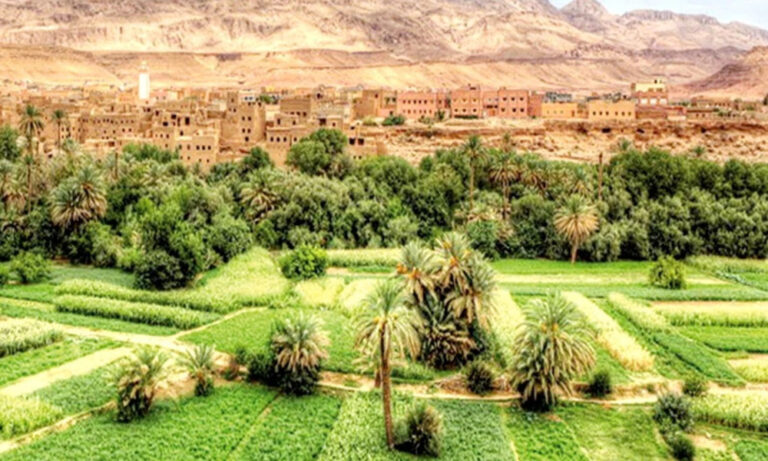
Morocco is continuing the territorialization of its climate strategy through this program intended to strengthen the environmental resilience of six provinces in the South-East particularly exposed to water stress and ecosystem degradation. The initiative specifically concerns the provinces of Tinghir, Zagora, Ouarzazate, Errachidia, Midelt, and Figuig, where several projects will be deployed as part of the Blue Economy Results Program (PPR), co-financed by the World Bank.
According to information published by the Ministry of Equipment and Water, via the Water Research and Planning Directorate (DRPE), a specialized design office will be mobilized for two years to carry out execution studies, technical control, and environmental monitoring missions for the various planned projects. The system will cover two distinct geographical areas in order to guarantee close monitoring of achievements. The planned interventions revolve around three main axes, beginning with the development of liquid sanitation projects in rural centers and localities. The second axis aims to improve the management of water resources through the collection of rainwater and the construction of weirs intended to promote the recharge of groundwater, while the third axis focuses on the environmental upgrade of educational establishments in rural areas to improve health conditions and strengthen infrastructure resilience.
The program is part of the implementation of the Kingdom’s climate commitments and the territorial application of its Nationally Determined Contribution (NDC). It is also based on the recommendations of the National Report on Climate and Development (CCDR), developed with the support of the World Bank to support adaptation and sustainable development policies. Beyond the construction of infrastructure, the initiative aims to strengthen climate governance mechanisms. The Blue Economy Results Agenda includes better coordination between the departments responsible for environment, water, agriculture, finance, and social protection, in order to promote an integrated approach to climate risk management at the local level. For the authorities, the challenge consists of transforming national strategic orientations into concrete actions for the benefit of populations most exposed to the effects of climate change. In a region marked by irregular rainfall, increasing pressure on water resources, and the vulnerability of rural areas, this program must contribute to sustainably strengthening water security and the resilience of the Saharan and pre-Saharan territories of the Kingdom.
MK/AK/Sf/fss/abj/APA