



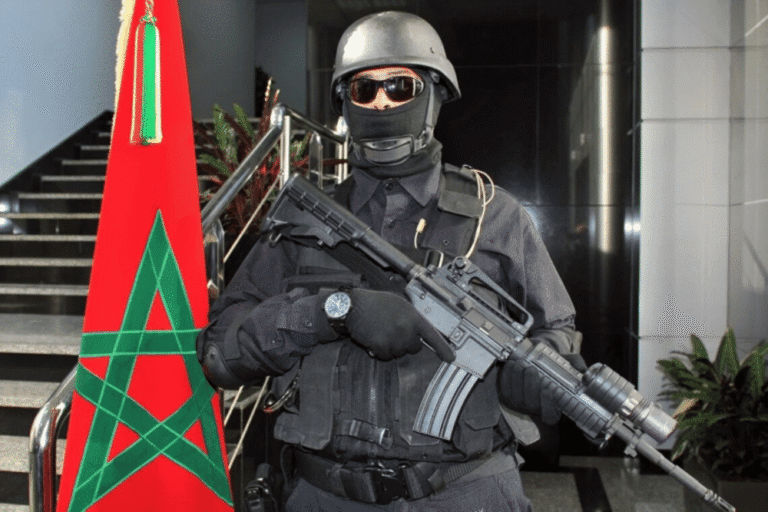
From its historical roots in tribal networks to its modern embrace of artificial intelligence, Morocco has strategically positioned intelligence as a central lever of its power and sovereignty.
The nation’s intelligence apparatus is now a legally sanctioned and coordinated tool for anticipating crises, neutralizing threats, and operating within an international framework.
A pivotal moment in this evolution was the May 16, 2003, suicide bombings in Casablanca, which prompted a complete overhaul of the country’s security architecture. Less than two weeks after the attacks, Parliament adopted Law 03-03, a foundational text that expanded investigative powers and provided a legal basis for prosecuting terrorist acts. This marked a turning point, allowing Morocco to present itself as a credible and sought-after partner in the global fight against terrorism.
Morocco’s intelligence tradition dates back centuries, with the Makhzen developing an early warning system based on tribal leaders, notables, and religious figures. This tradition has since evolved into a comprehensive institutional architecture, including:
DGED: The Directorate General of Studies and Documentation, responsible for foreign intelligence. The Directorate General of Territorial Surveillance, focused on internal security and counterintelligence. Integrated into the police and Royal Gendarmerie, with a focus on rural and strategic areas.
In recent decades, these structures have been modernized to address new threats. The 2011 constitutional reform explicitly enshrined the right to privacy and secrecy of communications, while also mandating judicial oversight of intelligence operations. This balance between operational efficiency and the respect for freedoms is also reflected in Article 108 of the Code of Criminal Procedure, which governs the interception of communications.
The appointment of Abdellatif Hammouchi as Director General of National Security (DGSN) while he concurrently led the DGST has been widely praised by international partners for promoting the seamless flow of information between police and domestic intelligence. Under his leadership, both the DGSN and DGST have modernized their tools and capabilities, earning a reputation for reliability and responsiveness.
The DGED, under the leadership of Mohamed Yassine Mansouri, has also developed a form of “intelligence diplomacy,” contributing to the building of alliances and the consolidation of Morocco’s regional position.
Analysts like Kamal Akridiss suggest that Morocco has reached a point where legislative overhauls are needed to address new challenges. He recommends a framework law that would define the missions and limits of the intelligence services, modernize Article 108 to include cross-border digital evidence, and strengthen post-quantum cryptography. The creation of a governance framework for artificial intelligence and an annual public report on intelligence activities would also help to build public trust.
MK/ac/Sf/fss/abj/APA