





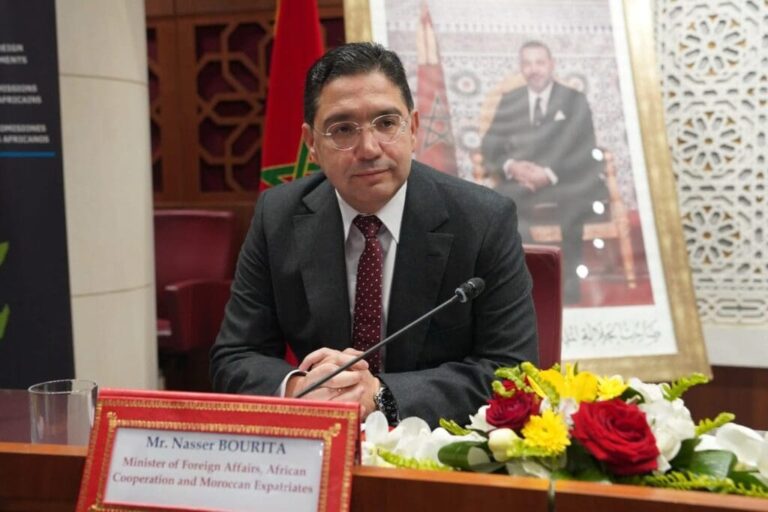
Morocco, through its Minister of Foreign Affairs Nasser Bourita, on Monday called for a renewed commitment to multilateralism and disarmament amid mounting global tensions.
Rabat’s appeal comes against the backdrop of escalating geopolitical strains, persistent armed conflicts and a troubling erosion of trust among international actors.
In a statement delivered on his behalf by Morocco’s Permanent Representative to the United Nations in Geneva, Omar Zniber, at the opening of the high-level segment of the Conference on Disarmament — currently chaired by Morocco — Bourita said these developments are weighing heavily on the multilateral disarmament system and complicating efforts to reach compromise, while making enhanced dialogue and effective cooperation more necessary than ever.
Recalling the central responsibility of the Conference on Disarmament as the sole permanent multilateral negotiating forum on disarmament, the minister stressed the imperative of substantially revitalising its work to address current security challenges.
He reaffirmed that nuclear disarmament remains both a political and moral imperative, calling for the full and effective implementation of the Treaty on the Non-Proliferation of Nuclear Weapons (NPT), described as the cornerstone of the international non-proliferation regime.
The upcoming NPT Review Conference, scheduled for May in New York, should provide an opportunity to restore trust, strengthen the non-proliferation regime and deliver outcomes capable of renewing hope within the international community, he said. Morocco hopes the conference will yield balanced progress, notably through the establishment of legally binding negative security assurances for non-nuclear-weapon states, as well as effective, transparent and measurable implementation of commitments adopted at previous review conferences.
At the same time, Bourita reiterated Morocco’s attachment to the inalienable right of states parties to develop research, production and use of nuclear energy for peaceful purposes, in accordance with Article IV of the NPT, emphasizing that this right must be exercised within a framework of strengthened international cooperation and under the supervision of the International Atomic Energy Agency (IAEA).
Addressing the persistent threat of nuclear terrorism, the minister welcomed the holding in Rabat from February 3 to 5, 2026, of the second plenary meeting of the Global Forum for the Prevention of Radiological and Nuclear Terrorism (Global FTPRNT), underscoring the importance of preventing non-state actors from gaining access to sensitive materials.
Turning to emerging threats, including artificial intelligence and autonomous weapons systems, Bourita called for the development of an international normative framework ensuring meaningful human control, as well as strengthened multilateral dialogue on preventing the militarization of outer space.
Morocco also remains committed to the universalisation of international disarmament instruments, notably the Biological Weapons Convention, and continues, in partnership with the United Nations Office for Disarmament Affairs (UNODA), to host regional workshops in Rabat aimed at sharing its experience and promoting universal adherence to the convention.
The minister urged “a substantive revitalisation of the work of the Conference on Disarmament to address the essential and multiple challenges facing the United Nations, whose fundamental pillar remains the maintenance of peace and security for the benefit of all.”
Morocco, represented by Ambassador Zniber, will hold the presidency of the Conference on Disarmament in Geneva until March 13, 2026.
AK/ac/lb/as/APA