



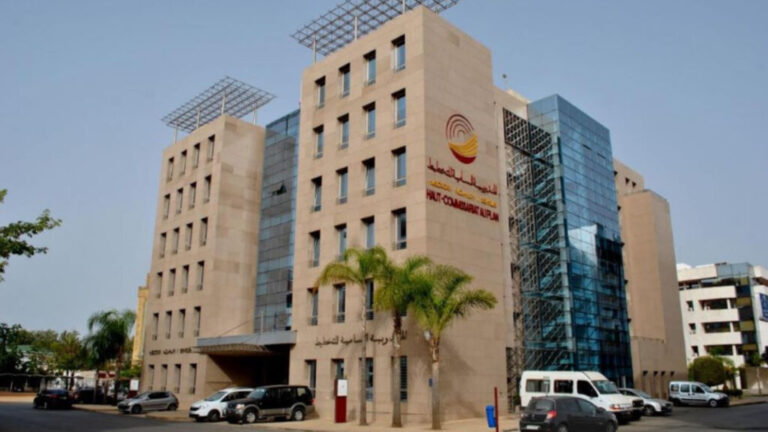
The Moroccan economy is expected to grow by four percent in 2026, according to forecasts released by the High Commission for Planning (HCP) in its 2026 Exploratory Economic Budget report.
This growth rate, although slightly down from the 4.4 percent expected in 2025, would confirm the continuation of a gradual recovery that began after a period of significant turbulence.
The HCP bases this forecast on a dual improvement in both the agricultural and non-agricultural sectors.
Value added in the primary sector is expected to increase by 4.7 percent in 2025, while that of non-agricultural activities is expected to increase by 4.3 percent, reflecting a recovery that extends across the entire national economy.
This outlook reflects both the anticipated climate normalisation in the agricultural sector and the gradual restart of industrial, commercial and service activities.
Furthermore, inflationary pressures appear to be contained. The implicit GDP index – an indicator of producer prices – is projected to reach 1.9 percent in 2025, before slowing to 1.5 percent in 2026, suggesting, according to the HCP, “a monetary climate more favourable to domestic price stability.”
This easing of prices would accompany money supply growth of 7.1 percent in 2025, then 6.2 percent in 2026, consistent with the consolidation of the economic recovery.
However, this picture remains marred by a worsening foreign trade deficit.
Estimated at 19.8 percent of GDP in 2025, the negative trade balance is expected to further worsen to 20.1 percent in 2026.
“Structural imbalances in the foreign trade balance remain a concern,” the report warns, highlighting the Kingdom’s continued vulnerability to its dependence on strategic imports.
The government, however, forecasts an improvement in terms of public finances.
The budget deficit would continue to decline, falling from 3.6 to 3.4 percent of GDP between 2025 and 2026.
At the same time, Treasury debt would decline slightly to 66.7 percent of GDP, compared to 67.1 percent a year earlier.
Overall public debt would remain under control at 78.9 percent of GDP, below the symbolic threshold of 80 percent.
The HCP’s Exploratory Economic Budget is an annual macroeconomic projection exercise based on observed economic trends.
It feeds the strategic thinking of public and private decision-makers, by offering an analytical reading of sectoral dynamics, budgetary balances and structural risks weighing on the economic trajectory of the Kingdom.
MK/Sf/ac/fss/jn/APA