





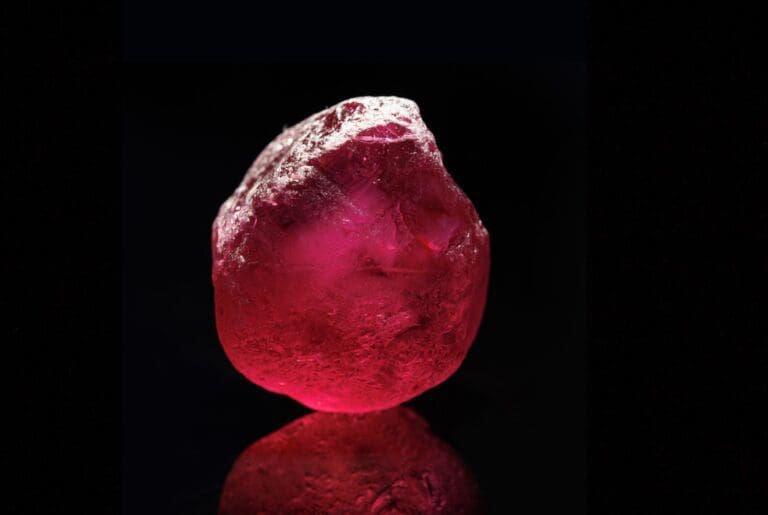
Mozambique’s ruby production rose sharply in the first half of 2026, with output increasing 61 percent year-on-year to 3.18 million carats, equivalent to nearly 78 percent of the government’s full-year production target.
Government performance data for January to June showed ruby production reached 3,183,333 carats, up from 1,972,110 carats in the same period of 2025.
The volume represents 78.4 percent of the government’s 2026 target of 4,062,547 carats.
The government attributed the strong performance largely to mining operations in the northern province of Cabo Delgado, Mozambique’s main ruby-producing region.
“In relation to ruby, positive execution of 78.4 percent and a growth rate of 61.4 percent were recorded compared with the same period of 2025,” the government said in a report.
It said the output growth was driven primarily by companies operating in Cabo Delgado despite operational constraints affecting one of the country’s leading producers.
Mozambique is one of the world’s leading ruby-producing countries, with most production concentrated in the Montepuez district of Cabo Delgado.
The sector is dominated by Montepuez Ruby Mining, which operates the Namanhumbir ruby deposit and is regarded as one of the world’s largest ruby producers.
The latest figures extend a strong growth trend in Mozambique’s ruby industry.
Production increased to 5.1 million carats in 2025 from 3.95 million carats in 2024, marking a 29 percent rise and surpassing the five-million-carat threshold for the first time.
Rubies are the most significant component of Mozambique’s gemstone sector and an important export commodity.
Around 70 percent of national ruby production is exported, with the government aiming to raise that proportion to 79 percent by 2029 as it seeks to strengthen the contribution of the mining sector to export earnings.
JN/APA