





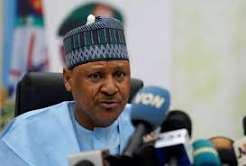
Nigeria’s Minister of Information and National Orientation, Mohammed Idris, says Nigeria is moving from a period of economic reform and stabilisation towards growth, production and shared prosperity.
Idris told journalists at a World Press Conference organised to commemorate Nigeria’s 66th Independence Anniversary on Thursday in Abuja that the administration of President Bola Tinubu inherited significant structural and fiscal challenges three years ago and chose to confront what he described as longstanding economic distortions.
He acknowledged that the reforms had imposed real costs on Nigerians, but assured that recent economic indicators showed signs of improvement.
“Today, however, Nigeria is moving from reform and stabilisation towards growth, production and shared prosperity,” Idris said.
According to him, the GDP growth is strengthening the country’s external position has improved, domestic refining capacity has expanded, while investment and productive activities are gaining momentum.
He said that the key challenge now was to ensure that the gains translated into tangible improvements in the lives of Nigerians through more jobs, higher incomes, improved access to education and credit, lower costs and wider economic opportunities.
Idris said that the government was pursuing these objectives through investments in infrastructure, agriculture, education, consumer credit, digital skills, energy and enterprise under the Renewed Hope Agenda.
He cited student loans, consumer credit, major highway projects and reforms in agriculture, livestock, solid minerals, oil and gas as measures aimed at increasing production and local value addition.
“The principle is simple: Nigeria must increasingly produce what it consumes, process what it extracts, and create opportunities from its abundant human and natural resources,” he said.
The minister, however, said economic progress could not be sustained without security, justice and national cohesion and that the government was continuing to strengthen the country’s security architecture while maintaining that the exercise of state authority must remain within the law.
On the role of the media and citizens, Idris said that nation-building was a shared responsibility, urging government to communicate truthfully and remain accountable, while the media should uphold accuracy, fairness, balance and verification.
He also stressed the importance of reliable information in enabling citizens to make informed democratic choices.
“As we mark 66 years of independence, we must also recognise that nation-building is a shared responsibility,” he said.
Idris said that Nigeria had made progress but still faced significant challenges, adding that the responsibility of the present administration was to leave behind a country that is “more prosperous, more secure, more united and more confident” than the one it inherited.
GIK/APA