



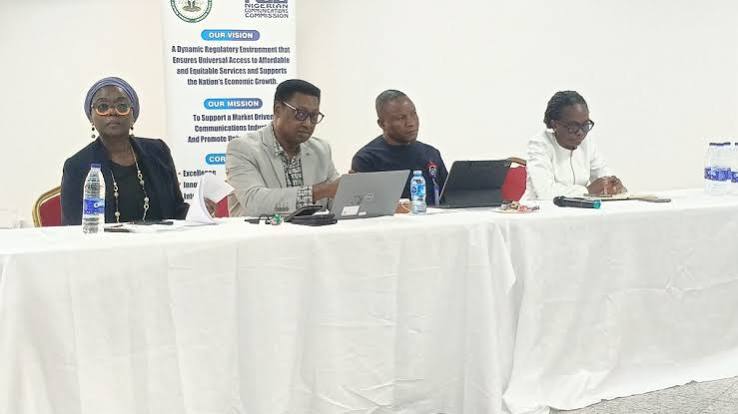
The Nigerian Communications Commission (NCC) says it has developed a device-scanning application to help authorised phone dealers, distributors and other industry participants verify and upload device identification information more efficiently.
The Head of the NCC Wireless Network, Technical Standards and Network Integrity Department, Mr. Kings Adeyemi, told journalists at a media briefing on Thursday in Lagos that the application is part of the commission’s broader Device Checker initiative, which aims to strengthen regulatory compliance, improve device verification and reduce the circulation of counterfeit and non-compliant telecommunications equipment in Nigeria.
Adeyemi said that the new application was developed after the commission identified challenges associated with manually entering device identification numbers into the verification platform.
He explained that businesses handling large inventories could face considerable administrative work when entering the International Mobile Equipment Identity (IMEI) numbers of individual devices.
According to him, manual entry can also produce errors, including incorrect numbers and duplicate submissions and that the scanning application is intended to reduce these problems by allowing authorised users to scan device identification information and compile the results in a tabular format before uploading them to the platform.
Adeyemi said that users could scan the identification information on devices in their inventory and have the application capture the details automatically.
He explained that the captured information is then organised into a table that can be reviewed before submission since the application can handle large inventories and identify duplicate entries.
For instance, where a device is scanned more than once, the system can flag the duplicate during the submission process.
This feature is intended to help users identify and correct errors before uploading their records.
The commission expects the application to reduce the administrative burden on businesses that need to process substantial numbers of devices.
The scanning application forms part of the NCC’s Device Checker Platform, which supports the verification of device identification information and regulatory compliance.
According to Adeyemi, the system works with relevant device identification databases and the commission’s type-approval records.
The objective is to help establish whether devices meet the applicable requirements for use on Nigerian telecommunications networks.
The commission explained that the initiative is necessary because counterfeit and non-compliant devices can interfere with network operations and affect other users.
According to Adeyemi, compliant mobile phones and base stations coordinate radio transmission power to maintain communication and limit unnecessary interference.
“Devices that fail to meet the relevant technical requirements may not operate as expected and could affect the performance of other equipment in the same area,” he added.
GIK/APA