





The Nigerian Government has unveiled plans to raise the country’s oil production with additional 810,000 barrels of crude oil per day from deepwater oil fields through a new cluster and nodal development initiative.
This initiative, championed by the Nigerian Upstream Petroleum Regulatory Commission (NUPRC), is part of a broader effort to revive the country’s offshore oil production, which has suffered a steep decline in recent years.
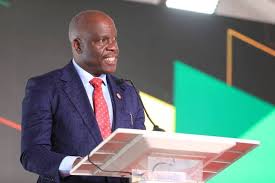
The Chief Executive of the NUPRC, Mr. Gbenga Komolafe, said at the stakeholders’ workshop on deep/shallow water cluster/nodal development in Abuja on Thursday that the plan was conceived in response to the industry’s dwindling offshore output and the need to harness untapped reserves for sustainable growth.
Represented by the Executive Commissioner for Economic Regulation and Strategic Planning of the Commission, Mr. Babajide Fashina, Mr. Komolafe said: “At the peak of our deepwater oil production in 2016, Nigeria was producing about 800,000 barrels of oil per day. Sadly, that figure has now dropped to below 500,000 barrels per day.
“Our data shows that we have over 5.13 billion barrels of oil and 13.53 trillion cubic feet of gas still sitting untapped in our deepwater acreages. Of this, 3.59 billion barrels fall under 2P reserves, meaning they are proven and probable but yet undeveloped.”
According to him, a preliminary regulatory deep-dive through the Field Development Plan approvals indicates that current developments-in-view could unlock around 1.55 billion barrels of oil and condensate and another 1.49 trillion cubic feet of associated gas.
“Once these approved FDPs are executed, we could see peak oil production rise by as much as 810,000 barrels of oil per day. The question we must ask is: what’s holding us back, and how can we overcome the barriers together?” he queried.
He said that a new Shallow and Deepwater Cluster Development Committee had been inaugurated within the NUPRC to work closely with international oil companies and indigenous producers to identify and mature these opportunities.
“Our goal is not just more production, but more value. Through this collaborative approach, we want to maximise returns from existing assets, ramp up volumes, and reduce unit technical costs,” he noted.
Komolafe lamented that deepwater fields, despite their huge potential, had become underutilised due to challenges such as funding gaps, infrastructure limitations, regulatory bottlenecks and delayed project sanctions.
“Our eight FPSOs, Floating Production Storage and Offloading units, are grossly underutilised today. We can do more if we work together,” local media reports on Friday quoted Mr. Komolafe as saying.
He added that deep offshore reserves currently account for 18 per cent of Nigeria’s total oil and condensate reserves, with major discoveries such as Bonga, Agbami, Egina, and Erha fields leading the way.
“Today, we have cumulatively produced over 4.4 billion barrels from our deepwater operations, thanks to companies like Shell, ExxonMobil, TotalEnergies, Agip and Chevron. But we must now move beyond the past and look toward unlocking future barrels,” Komolafe added.
GIK/APA