





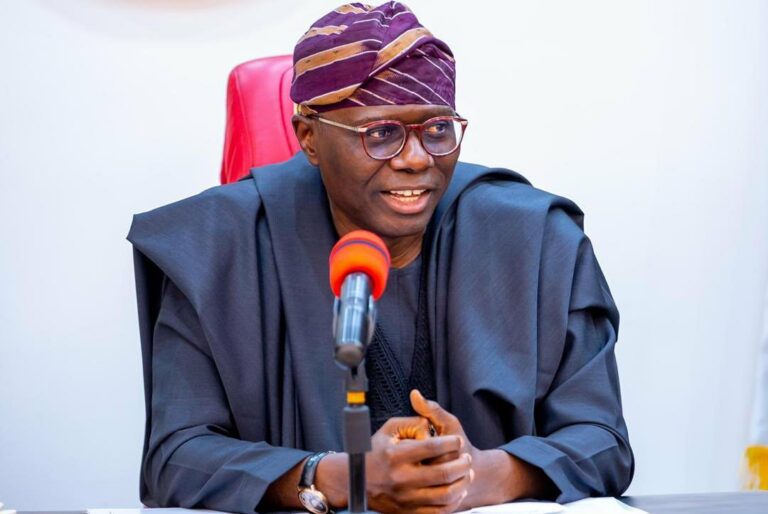
Governor Babajide Sanwo-Olu of Lagos State in Nigeria has advocated for greater private sector involvement in driving Africa’s economic integration under the African Continental Free Trade Area (AfCFTA), emphasizing that businesses, not governments, hold the key to the continent’s prosperity amid global uncertainty.
In his goodwill message delivered on his behalf by the Lagos State Commissioner for Commerce, Cooperatives, Trade and Investment, Folashade Ambrose-Medebem, at the NBGN Business Forum in Lagos on Thursday, the governor said that Lagos was the ideal venue for the forum, noting that the city represents “where Africa’s ambition meets possibility”.
“You are here to chart a path for private enterprise to drive continental integration, expand trade and anchor Africa’s growth in resilient partnerships,” Sanwo-Olu said.
The governor lauded the forum’s theme: “Mobilizing Africa’s Private Sector for AfCFTA Towards African Economic Development Amid Global Uncertainty” as both timely and crucial, given the rapidly shifting global trade patterns, inflationary pressures, and climate concerns confronting nations.
He stressed that while governments can negotiate treaties and frameworks, the success of AfCFTA ultimately depends on the private sector’s capacity to produce, export, and invest.
“Governments can negotiate tariffs and treaties, but businesses must produce, must export, must invest, and believe in cross-border possibilities,” he noted. “That belief must persist even in the face of global uncertainty, volatile currencies, supply chain shocks and regional instability.”
Highlighting Lagos’ role as a hub of enterprise and innovation, Sanwo-Olu said that the stated that has created an enabling environment that supports private investment through targeted infrastructure and policy reforms.
From the tech clusters of Yaba to the Lekki Deep Sea Port and the expanding industrial zones across the state, Lagos, he noted, is intentionally aligning its development blueprint with AfCFTA’s broader goals of promoting intra-African trade and competitiveness.
“We have created platforms where public policy meets private vision. Lagos State continues to invest in critical infrastructure, improve transport connectivity, strengthen logistics chains, and build the digital backbone that modern trade requires,” the governor said.
According to the governor, several state-led initiatives designed to empower small and medium enterprises, SMEs are the backbone of Africa’s private sector.
The governor cited the Lagos State Access to Finance through Cooperatives Programme, developed in partnership with the Bank of Industry, which provides ₦5 billion in matching funds at zero interest to help micro, small and medium enterprises (MSMEs) scale and thrive.
“We understand that access to affordable finance remains one of the biggest challenges for MSMEs. Through this initiative, we’re ensuring that more businesses can access single-digit funding, enjoy moratoriums, and receive the training necessary to expand sustainably,” the governor said.
Another key intervention, the governor noted, is the Lagos State Export Readiness Programme, which has trained 253 entrepreneurs, including 189 women, to prepare them for export markets.
The governor also sponsored 20 of these entrepreneurs to the Intra-African Trade Fair (IATF) in Algiers, where they successfully showcased Nigerian products and secured new business partnerships.
The governor added that Lagos State in collaboration with the Federal Ministry of Trade, recently won the bid to host the next edition of the IATF, reaffirming its position as the commercial gateway to Africa.
In conclusion, the governor charged to stakeholders to transform discussions into concrete outcomes and “this is the time for collaboration, not competition; for unity, not isolation”.
“If we succeed in mobilizing our private sector effectively, Africa will overcome global uncertainty and emerge stronger, richer, and more self-reliant. Let us turn Africa’s potential into prosperity,” the governor added.
GIK/APA