



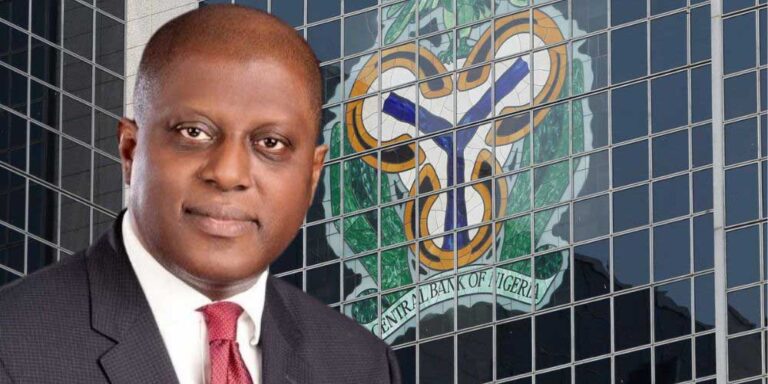
The Central Bank of Nigeria (CBN) says that the rise in external reserves to $52.5 billion was due to recent stability in the foreign exchange market and easing inflation.
The CBN Governor, Dr. Olayemi Cardoso, who was represented by the Acting Director of Corporate Communications and Investor Relations, Mrs. Hakama Sidi-Ali, stated on Tuesday at the CBN Fair in Gombe in northern Nigeria that this achievement is due to the ongoing monetary reforms that are producing positive results.
He noted that headline inflation fell slightly from 15.93 per cent in May 2026 to 15.91 per cent in June, while core and food inflation also declined.
Speaking on the theme of the fair “Driving Alternative Payment Channels as Tools for Financial Inclusion, Growth and Accelerated Economic Development”, Cardoso attributed the improvement to disciplined monetary tightening, exchange rate reforms and improved market transparency.
According to him, the naira has become more stable, with the gap between the official exchange rate and Bureau de Change rates falling to below two per cent.
“The naira continues to strengthen, with the spread between official and Bureau de Change rates now below two per cent,” he said.
Cardoso said that Nigeria’s external reserves had risen above 52.5 billion dollars as of July 17, 2026, describing it as the highest level in 17 years and above the CBN’s annual target.
He said that the increase was driven by sustained inflows and renewed investor confidence in the Nigerian economy.
According to him, the CBN has introduced several reforms over the past 34 months to support sustainable economic growth, create jobs, and reduce poverty.
The reforms include the unification of the foreign exchange market, banking sector recapitalisation, the non-resident Bank Verification Number, the B-Match foreign exchange trading system, the Nigeria Payments System Vision 2028.
He also said that the introduction of a 75 per cent Cash Reserve Ratio on non-Treasury Single Account public sector deposits was aimed at improving liquidity management and reducing inflationary pressure.
Cardoso said that the CBN had worked with the Financial Markets Dealers Association to introduce the Nigerian Overnight Financing Rate as a benchmark for short-term funding transactions.
He said that the rate would provide a transparent, market-based reference and align Nigeria’s money market with international standards.
Cardoso also said that the CBN remained committed to promoting alternative payment channels to deepen financial inclusion and support economic activities.
He said that the fair provided an opportunity for the apex bank to engage directly with citizens, businesses and other stakeholders, explain its policies, and receive feedback.
“The fair is one of the bank’s platforms for engaging the public on its policies and programmes,” he said.
He urged the participants to ask questions and seek clarification on the bank’s operations, including financial consumer protection, payment system innovations, microfinance, monetary policy, and the proper handling of the naira.
GIK/APA