



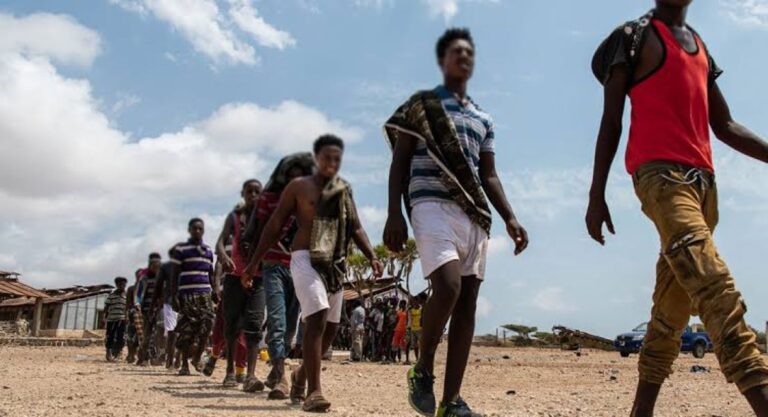
The International Organization for Migration (IOM) said that over 20,000 Ethiopian migrants have crossed into Djibouti since September 10, 2026 as thousands of them are facing severe food and water shortages during the dangerous desert route toward Yemen.
Alexandre Coissac, head of the IOM’s Djibouti delegation, in a press briefing held on Tuesday in Geneva, indicated that the journey along the eastern migration route—which connects the Horn of Africa with Yemen and Gulf countries and is one of the world’s most dangerous and heavily traveled migration routes—has continued at a high rate.
Coissac said migrants persist in traveling along the corridor, which connects the Horn of Africa with Yemen and the Gulf and is one of the “busiest and most dangerous” migration routes in the world.
According to IOM’s statement, between September 20 and 30, observers recorded more than 3,000 stranded migrants along Djibouti’s migration routes, many facing dehydration, exhaustion and critical shortages of food and water in remote desert areas.
The IOM noted that travelers are increasingly using secondary routes to avoid detection, complicating efforts to deliver humanitarian assistance to those in urgent need.
IOM provides emergency aid including food, water and medical support to stranded migrants while facilitating voluntary returns for those who request it.
Djibouti is simultaneously receiving people fleeing Yemen while managing the return of migrants from that country, with the IOM recording 539 Ethiopian returnees since September 10.
The dual movements come as fighting intensifies between Saudi-backed government forces and Houthi rebels in Yemen, displacing more than 184,000 people since August 1 according to the latest agency data.
Coissac warned that the scale and complexity of these overlapping movements are stretching existing resources and services in the small Horn of Africa nation to their limits.
The agency called for increased international support to address the growing crisis, emphasizing that migrants require safety, protection and sustained humanitarian assistance.
Coissac told the Geneva press briefing that without additional funding, the IOM will struggle to maintain current levels of aid to both incoming migrants and returning refugees.
MG/as/APA