





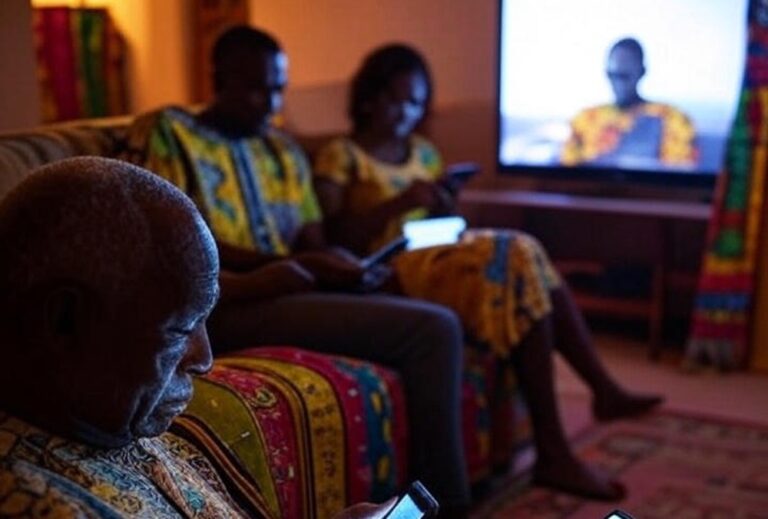
Nearly 99% of Senegalese households own digital gadgets, but the gap in internet access between urban and rural areas remains marked, according to the ENTICS 2024 survey released on July 24.
Mobile phones represent 89.1% of the devices, according to the results of the ENTICS 2024 survey released on Thursday by the National Agency of Statistics and Demography (ANSD) and the Telecommunications and Postal Regulatory Authority (ARTP).
According to data presented in Dakar, the level of equipment is almost universal in Dakar (97.2%), compared to 80.7% in rural areas. This inequality is also reflected in home internet access, which reaches 43.8% in the capital but remains limited to 3% in rural areas.
ENTICS 2024 also reveals that 65.6% of households cite the high cost of internet subscriptions as a barrier to internet access, while 27.4% cite a lack of infrastructure.
Digital usage is dominated by voice calls (100%), followed by internet connection (86.2%) and messaging, with a high prevalence in Dakar (64.6%). Telephone banking services are more widespread in the Diourbel region (12.8%) than in Dakar (9.6%). Only 8.1% of households have made purchases or sales online, mainly in Dakar (16.6%).
In the private sector, 73.9% of businesses use laptops, 64.4% smartphones, and 60.9% desktop computers. E-commerce is reported by 29% of businesses, while 28.4% have a website. Electronic document management tools remain uncommon (9.8%).
In government departments, desktop computers are the most widely used (90.8%), far ahead of laptops (30.2%). Internet access is a problem for 71.1% of public institutions. Furthermore, only 19.7% report conducting awareness-raising activities on electronic waste.
According to the ARTP, the results of the ENTICS 2024 survey will serve as a basis for developing the new Digital Senegal Plan 2025-2030.
A technical feedback meeting is scheduled for August 15.
AC/Sf/fss/as/APA