





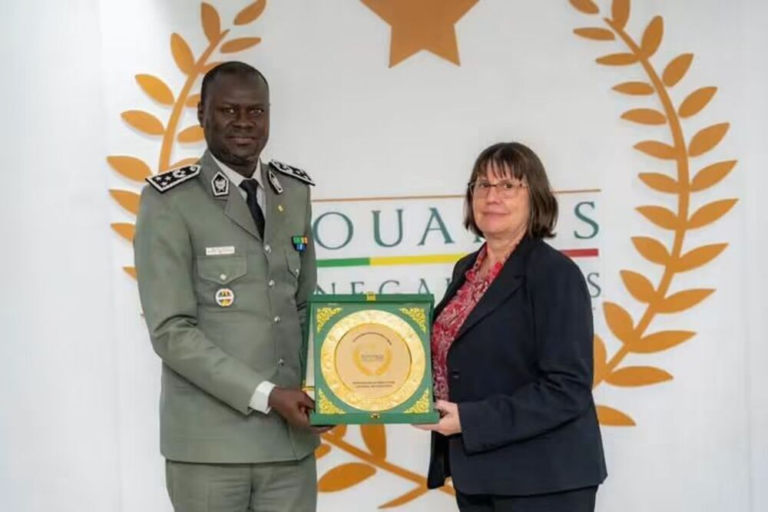
Senegal and the United States are strengthening customs cooperation through an electronic data-sharing mechanism aimed at better anticipating risks associated with international cargo and more effectively combating illicit trafficking and transnational organised crime.
The Senegalese and US customs administrations held a high-level meeting in Dakar on Tuesday, 1 September 2026, to discuss the implementation of the Foreign Electronic Cargo Data Exchange Program (FECDEP).
The meeting, held in the Mouhamadou Makhtar Cissé conference room at the Directorate General of Customs (DGD), brought together Senegalese customs officials and a delegation from the United States Customs and Border Protection (CBP).
Through the FECDEP, Dakar and Washington seek to improve the sharing of information on internationally transported goods in order to strengthen risk detection and assessment capabilities.
The mechanism is expected in particular to enable the two administrations to better identify consignments and means of transport that could pose risks to border security and international supply chains.
Against a backdrop of expanding trade and increasingly sophisticated criminal networks, data analysis has become a key tool for prevention and control. Sharing information in advance should therefore enable more precise targeting of high-risk operations and help improve the effectiveness of customs controls.
The initiative also seeks to safeguard the smooth flow of legitimate trade by enabling customs authorities to focus their resources on flows presenting the highest risks.
The implementation of the FECDEP is part of longstanding customs cooperation between Senegal and the United States. It further consolidates commitments stemming from the Mutual Assistance Agreement in Customs Matters signed by the two countries in 2015.
With the new mechanism, the Senegalese and US administrations are signalling their determination to strengthen operational and technological cooperation in response to increasingly organised and transnational trafficking networks.
TE/Sf/lb/as/APA