



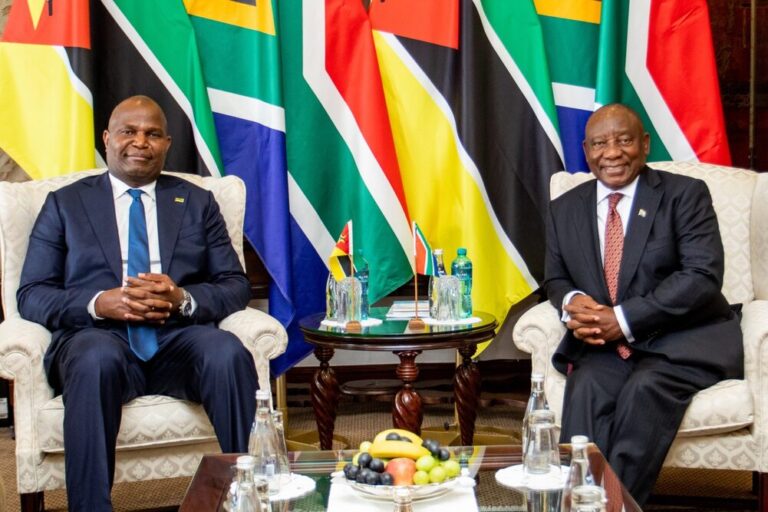
South Africa and Mozambique have reaffirmed their commitment to work together in responding to rising migration‑related pressures and a new wave of xenophobic unrest in South Africa following a meeting between Presidents Daniel Chapo and Cyril Ramaphosa on Wednesday.
Chapo said the talks held in Pretoria underscored the long‑standing interdependence between the two countries and the need to turn their shared geography into tangible economic and social cooperation.
He described his visit to South Africa as “very fruitful,” noting that both leaders issued clear directives to their ministers to accelerate joint programmes in agriculture, energy, mineral resources, infrastructure and other sectors central to economic integration.
The renewed commitment comes amid heightened tensions in South Africa where recent anti‑migrant protests have targeted foreign nationals, particularly Mozambicans, Basotho and Zimbabweans.
Demonstrations in cities such as Durban, Johannesburg and Cape Town have been accompanied by threats of expulsion, harassment and sporadic violence, prompting concern from regional governments and international bodies.
More than 300,000 Mozambicans live in South Africa and authorities in Maputo have been monitoring the situation closely as fears grow within migrant communities.
Chapo said the two countries must “fight together against xenophobia,” recalling Mozambique’s support for South Africans during the struggle against apartheid.
“We have always been together during the struggle against Apartheid. We, Mozambicans, fought together with South Africa to achieve the freedom of the South African people.”
Ramaphosa echoed the sentiment, saying the meeting was essential for addressing economic, security and social issues affecting both nations.
He said South Africa’s employment restrictions on undocumented workers would be implemented alongside efforts to ensure migrants have proper documentation, stressing that cooperation was needed to manage cross‑border movement responsibly.
We encourage all people from other nations to ensure they have the proper documentation,” Ramaphosa said.
He also sought to reassure South African businesses that discussions on trade and regulatory restrictions would continue, with the aim of expanding commercial ties and reducing friction between the two economies.
JN/APA