





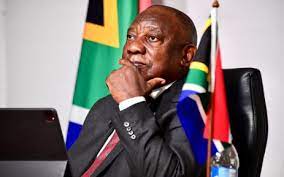
South Africa’s Constitutional Court has ordered Parliament to properly reconsider the Section 89 Independent Panel report into President Cyril Ramaphosa’s Phala Phala scandal, ruling that lawmakers acted irrationally and unlawfully when they rejected the panel’s findings in December 2022.
The judgment, delivered on Friday in Johannesburg, revives the possibility of a full impeachment inquiry into the president.
The court found that the National Assembly’s 214–148 vote to dismiss the panel’s report violated South Africa’s constitution, agreeing with the argument by the opposition Economic Freedom Fighters (EFF) that Rule 129 of parliament’s impeachment procedures gave lawmakers excessive discretion to override an independent process.
The Section 89 panel, chaired by former Chief Justice Sandile Ngcobo, had concluded in 2022 that there was prima facie evidence Ramaphosa may have committed serious constitutional violations relating to the 2020 burglary at his Phala Phala game farm where thieves stole foreign currency hidden in furniture.
The panel questioned Ramaphosa’s explanation that the money was payment for 20 buffalo from a Sudanese businessman, noting that the animals remained on the farm years later and that no tax records existed for the transaction.
It also found evidence suggesting possible breaches of the Executive Ethics Code, failure to report the theft to the Hawks as required by law, and the use of state resources in an unofficial cross‑border investigation led by Presidential Protection Unit head Wally Rhoode.
A later report by the Independent Police Investigative Directorate confirmed procedural violations in the handling of the case.
Parliament, then controlled by an African National Congress (ANC) majority, voted down the panel’s findings in 2022, shielding Ramaphosa from further scrutiny.
The Constitutional Court has now overturned that decision, directing lawmakers to revisit the report and decide whether to initiate a full impeachment inquiry.
The ruling lands in a transformed political landscape. Following the 2024 general elections, the ANC no longer holds a majority, meaning the outcome of any renewed vote will depend on shifting alliances among parties including the ANC, Democratic Alliance, EFF and uMkhonto we Sizwe.
JN/APA