



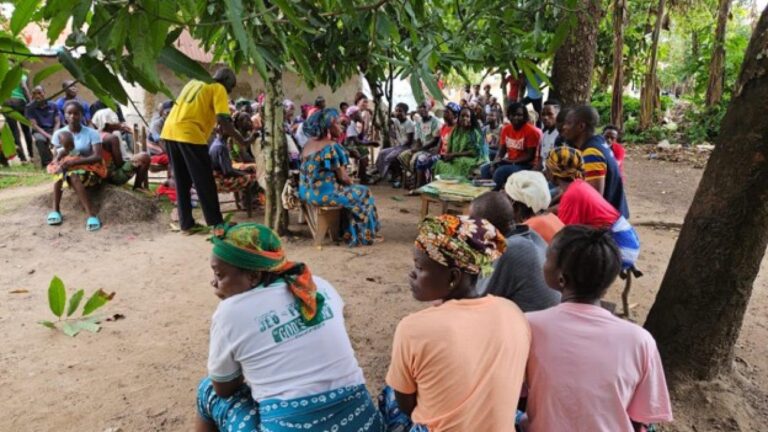
A quiet transformation is taking place across Maryland, Grand Gedeh, Grand Bassa, Grand Cape Mount, and Bong Counties in rural Liberia.
For generations of local women and girls, the course of life has been heavily shaped by poverty, harmful traditional practices, limited educational opportunities, and deep gender inequality. Survivors of sexual and gender-based violence (SGBV), women and girls affected by female genital mutilation (FGM), women living with disabilities, female-headed households, and out-of-school girls have long faced multiple layers of social exclusion and economic hardship. Today, new pathways toward dignity, inclusion, and economic independence are emerging through the Spotlight Initiative 2.0, an initiative supported by the European Union and UN Women Liberia, and implemented by the HOPE Consortium, which includes HOPE Liberia, HeForShe Liberia, and the Disabled Children Female Empowerment Network.
The Spotlight Initiative 2.0 began its work not with standard training sessions or direct financial support, but with intentional grassroots conversations. Project teams traveled extensively to towns and villages across the five targeted counties, meeting face-to-face with chief elders, traditional leaders, local government officials, youth, and community members in palava huts, town halls, and local administrative offices. Together, these communities openly discussed their daily challenges, long-term aspirations, and the specific opportunities they believed could create lasting change. Through these structural dialogues, local leaders and residents actively helped shape the beneficiary identification process and directly informed the design of all future project interventions.
Following these comprehensive consultations, the project identified vulnerable women and girls across the five counties to connect them to structured skills development programs, entrepreneurship training, financial literacy education, Village Savings and Loan Associations (VSLAs), and various other income-generating opportunities. Community members expressed a strong interest in practical livelihood skills such as soap making, hairdressing, catering, agriculture, tailoring, and small business management, which are vital activities that help rural families build sustainable sources of income.
Although the initiative is still in its early operational stages, encouraging signs of systemic change are already highly visible. Across the five participating counties, more than 1,100 women and girls have been successfully identified and connected to support networks and empowerment opportunities. Furthermore, project partners report a notable increase in the participation of women and young people in community meetings, while enrollment in livelihood and entrepreneurship programs continues to grow steadily.
Perhaps even more importantly, critical conversations that were once considered difficult or entirely taboo are beginning to take place openly in public spaces. Complicated issues such as SGBV, FGM, early marriage, women’s rights, and economic empowerment are increasingly being actively discussed among traditional leaders, government officials, youth representatives, and women themselves. In Grand Gedeh County, Beatrice Toe, a mother of five from Billibo, sees the initiative as a definitive opportunity to create a better future for her family, noting that the project has given her real hope to better support her children, improve their future, and open up new opportunities through direct training. For Beatrice and many others, access to skills development and local savings groups represents far more than a standard development program; it is a tangible chance to build financial independence, keep children in school, and secure lasting stability for the household.
Looking ahead, significant challenges certainly remain across rural Liberia. Deeply rooted social norms naturally take time to change, and women living with disabilities or experiencing extreme poverty continue to face distinct barriers to full societal participation. Yet, a firm foundation for lasting transformation is actively being laid. As the Spotlight Initiative 2.0 continues to expand its livelihood support, skills development, mentorship, and community engagement activities, an increasing number of women and girls will gain the tools necessary to strengthen their economic independence and participate fully in community life.
ABJ/APA