



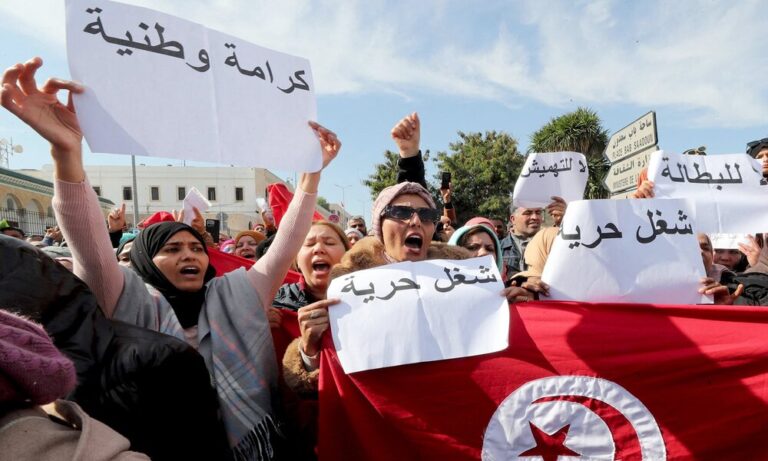
Tunisia’s Law 18, which was adopted in December 2025 to facilitate the recruitment of long-term unemployed graduates, has yet to be effectively implemented, sparking renewed social mobilization and concern across the country.
Promulgated on December 22, 2025, with the backing of President Kaïs Saïed, the law introduced “exceptional provisions” specifically designed to integrate higher education graduates into the public sector. However, more than four months after its official adoption, multiple sources indicate that no concrete rollout has been observed.
The delay is largely attributed to a lack of administrative mechanisms and the absence of implementing decrees, as authorities have not yet provided a clear operational timeline for integrating beneficiaries. The law is intended to prioritize graduates who have been unemployed for over ten years, a group that remains particularly vulnerable to market exclusion. This legislative stagnation occurs within a difficult economic climate characterized by limited fiscal space and significant pressure on public finances. National statistics from 2025 show a general unemployment rate of 15.8%, though this figure exceeds 20% for university graduates in certain regions. Furthermore, the government has not disclosed an official estimate for the law’s overall cost, leading to questions regarding its long-term financial sustainability.
In response to these delays, protests broke out in late April as frustrated graduates in several cities demanded the immediate enforcement of government commitments. These demonstrations add to broader social tensions regarding employment and purchasing power. While the government has reiterated the objectives of the law, it has failed to provide detailed responses concerning implementation deadlines. Observers note that the success of Law 18 will ultimately depend on the state’s capacity to mobilize resources and reform public sector recruitment processes, which are already under strain. This situation underscores the difficulty of turning political promises into actionable policy within a constrained economy and raises questions about the credibility of Tunisia’s public employment strategies.
MK/AK/Sf/lb/abj/APA