



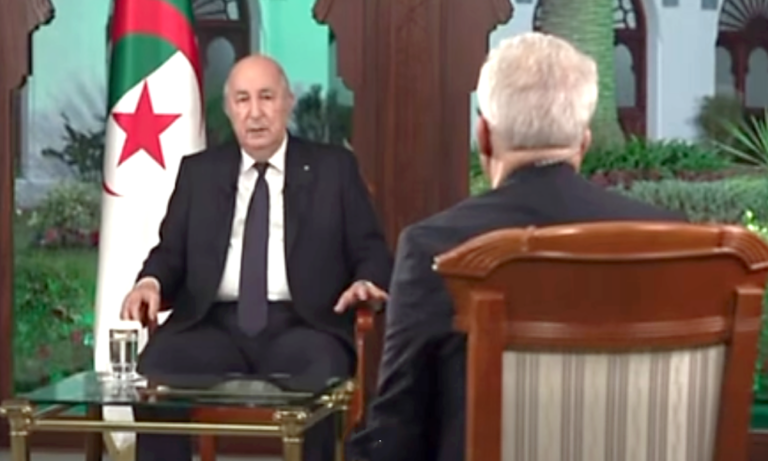
Algerian President Abdelmadjid Tebboune has issued a formal call for dialogue in Mali, expressing concern over the nation’s worsening security and political instability during a national media broadcast on April 2.
Tebboune urged Mali’s transitional authorities to engage directly with their population, warning that the current trajectory could lead to predictable instability if an inclusive approach to the crisis is not adopted. While the President emphasized Algiers’ diplomatic doctrine of mediation and the rejection of force, he also characterized the 2015 Algiers Peace Agreement as a domestic Malian matter, effectively downplaying Algeria’s direct role in the process.
Despite these diplomatic overtures, Algeria’s regional influence appears to be declining as Malian authorities have gradually distanced themselves from Algiers-led mediation frameworks since 2022. This shift is marked by Bamako’s pursuit of alternative security partnerships and a broader strategic realignment within the Sahel. Specifically, the formation of the Alliance of Sahel States between Mali, Niger, and Burkina Faso has reshaped traditional cooperation mechanisms, significantly limiting Algeria’s ability to influence developments in the region. No updated operational framework for the original peace agreement has been formally relaunched to date.
On the broader diplomatic stage, President Tebboune reaffirmed Algeria’s commitment to a policy of non-alignment, maintaining relations with the United States alongside long-standing partners like Russia and China while reiterating a refusal to host foreign military bases. While Algiers maintains its ambition to play a central role in managing Sahelian crises, it faces a landscape increasingly defined by the growing autonomy of military-led governments and diversified global alliances. This shifting environment raises significant questions regarding Algeria’s ability to adapt its traditional diplomatic approach to a rapidly changing African context.
MK/AK/te/lb/abj/APA