



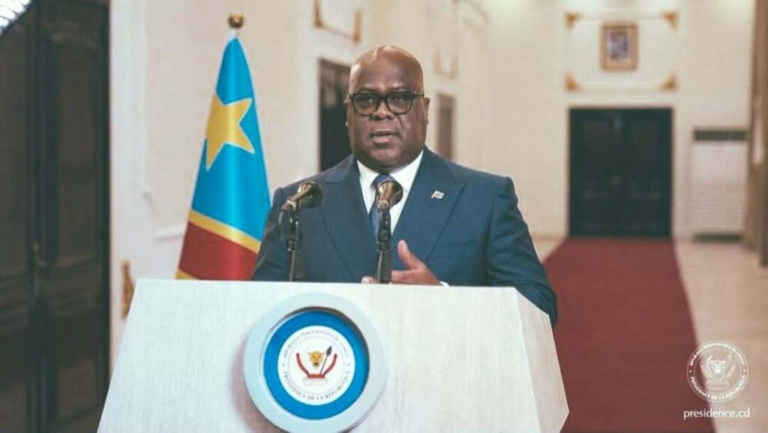
President Félix Tshisekedi signed a presidential ordinance on Sunday, September 13, 2026, creating an advisory committee tasked with laying the groundwork for an upcoming national dialogue—a political initiative immediately denounced by leading opposition figures who allege executive overreach.
Rather than formally convening the assembly, the newly structured body is mandated to evaluate financial, logistical, technical, and security requirements, while submitting strategic recommendations to the head of state regarding the formation of a broader preparatory commission.
Under the terms of the decree, the committee operates under the direct oversight of the presidency, which retains sole authority to appoint or dismiss its leadership, members, and eleven technical experts, as well as to control all official public communications. This concentrated structure has drawn swift condemnation across the political spectrum. Spokespersons for former President Joseph Kabila’s People’s Party for Reconstruction and Democracy dismissed the move as a non-event, while leaders from Moïse Katumbi’s Ensemble pour la République and Martin Fayulu’s Lamuka coalition rejected the process entirely, calling for a genuinely independent forum to address regional conflict and secure constitutional order ahead of the 2028 elections. Meanwhile, the Congolese Human Rights Commission adopted a cautious stance, urging peaceful negotiation while pledging independent oversight to prevent political abuses.
TE/Sf/lb/abj/APA