





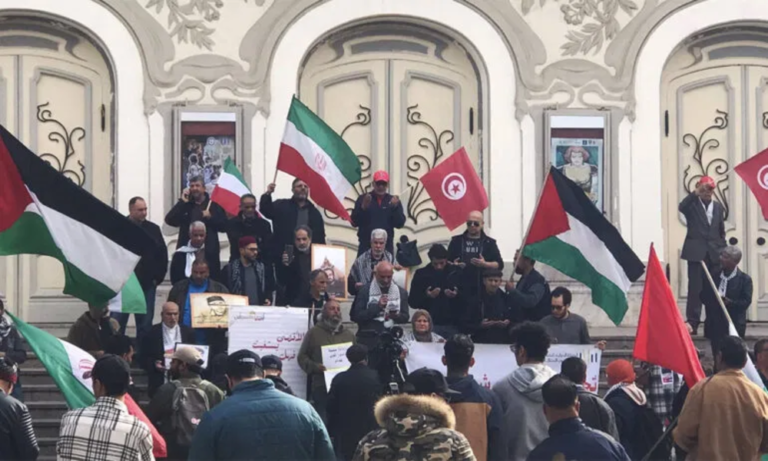
In the wake of the announcement regarding the death of Iranian Supreme Leader Ayatollah Ali Khamenei, Tunisian authorities have opted for a notably measured diplomatic response.
Rather than offering explicit condolences or a direct stance on the leadership change in Tehran, the Ministry of Foreign Affairs released a statement on Sunday, March 1, focusing instead on the broader “dangerous military escalation” currently unfolding across the Middle East. The communique expressed “deep concern and grave anxiety,” urging the United Nations Security Council to intervene and call for an immediate ceasefire to protect international peace.
This current pillar of neutrality represents a significant shift in tone compared to previous years. It stands in sharp contrast to President Kaïs Saïed’s high-profile trip to Tehran in May 2024 to pay respects following the death of President Ebrahim Raisi. Analysts suggest that the brevity and prudence of this new statement indicate a strategic recalibration of Tunisia’s foreign policy, moving away from previous proximity to the Iranian administration in favor of a more balanced regional position.
A key feature of the official statement was the explicit list of nations with which Tunisia expressed “full solidarity,” specifically naming Saudi Arabia, Kuwait, Qatar, Bahrain, the United Arab Emirates, Jordan, and Iraq. By pointedly aligning itself with these Arab states—many of which have long-standing strategic rivalries with Iran—Tunis appears to be signaling a desire to avoid diplomatic isolation. This move emphasizes a commitment to Arab and Islamic brotherhood and the principles of state sovereignty over specific ideological alliances.
Ultimately, Tunisia’s reaction reflects a desire to preserve its room for maneuver in an increasingly volatile regional environment. By prioritizing the language of international law and institutional prudence, the North African nation is reaffirming its traditional role as a moderate voice. This approach allows Tunis to maintain open channels with various partners who hold divergent interests while navigating the military tensions and growing uncertainties that currently define the Middle East.
MK/ak/sf/lb/abj/APA