





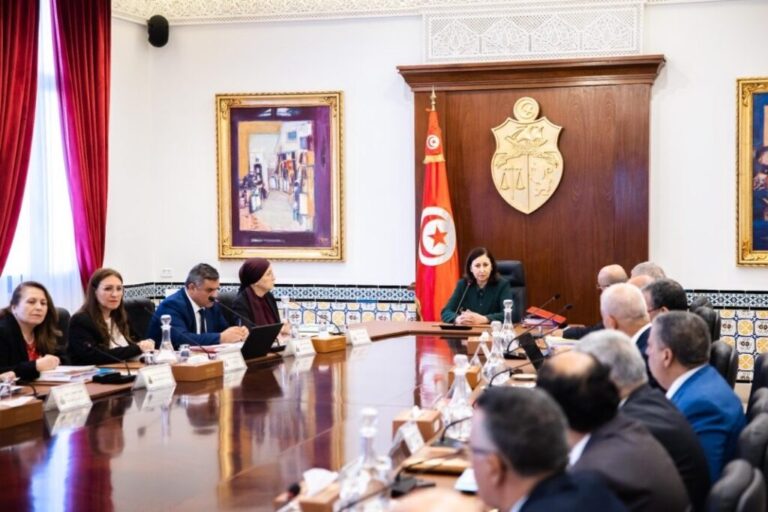
Tunisia has adopted an ambitious new budget bill for 2026, which the government says will promote social justice and economic recovery.
However, despite the bold promises, the country faces a widening deficit and increasing external debt, casting serious doubt on its ability to deliver on its commitments.
The 2026 budget bill is built on three key pillars: strengthening the welfare state, supporting businesses through public investment, and implementing tax reforms to modernize services and combat evasion.
Prime Minister Sarra Zaafrani Zenzri stated that the budget is designed to meet “the expectations of all social categories.”
Despite the government’s optimistic outlook, many observers believe the plan is disconnected from Tunisia’s financial realities. The country is grappling with a budget deficit estimated at over 5% of its GDP, public debt exceeding 80% of GDP, and inflation still hovering around 7%.
This financial fragility limits the government’s ability to fund new social policies or make significant investments. The situation is made worse by the stalled negotiations with the International Monetary Fund (IMF), which have left Tunisia’s financial stability in limbo. For many economists, the 2026 budget bill is little more than a statement of good intentions without a clear plan for implementation.
As a result, Tunisia remains stuck in a cycle of deficits and dependence on foreign donors, making it difficult to achieve its promises of social justice and economic recovery.
MK/Sf/fss/abj/APA