





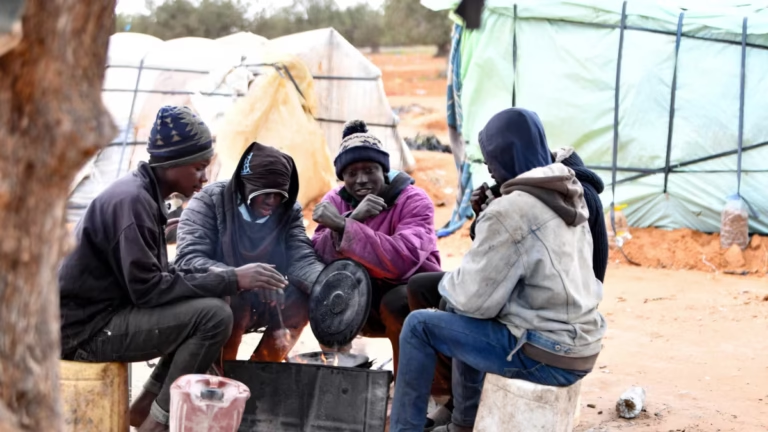
In the olive groves of Sfax, the remnants of recent evacuations of sub-Saharan migrants reveal the scale of an unprecedented security campaign.
Despite efforts by the IOM, Tunisian authorities, under pressure from President Kais Saïed, are prioritising voluntary returns over a structured humanitarian response.
In 2024, over 7,000 migrants were repatriated—three times more than in 2023. So far this year, 1,740 individuals have been assisted. Yet, this figure falls short for President Kais Saïed, who in late March urged NGOs to expedite return procedures.
Burned tents, broken utensils, and abandoned clothing: the scars of recent evacuations carried out by Tunisia’s National Guard remain evident in the olive orchards surrounding Sfax.
For two years, these agricultural lands have sheltered thousands of sub-Saharan migrants who fled central Sfax following successive security operations since 2023. Others, in precarious situations without access to housing or jobs, swelled their ranks in recent months.
While Tunisia has dismantled informal camps in the past, the current operation stands out for its scale.
This escalation follows complaints from olive grove owners whose lands were occupied.
For managing those evicted, Tunisian authorities are banking on voluntary returns, supported by the International Organization for Migration (IOM).
In this approach, they appear to favour security and logistics over sustainable humanitarian support.
Although IOM assistance remains crucial, the low number of returns this year highlights the limitations of existing mechanisms.
SL/ac/sf/lb/as/APA